
Parashat Vayakhel-Pekudei
Making Shabbat, Building Holiness, and Restoring Order
March 13, 2026 | 24 Adar 5786
Commentary by Michael L Weiss
Opening Reflection
This week we arrive at Parashat Vayakhel-Pekudei, and with it the close of Sefer Shemot, the Book of Exodus. One might expect a book so full of slavery and liberation, Pharaoh and plagues, Sinai and sea-splitting drama to end with one last thunderclap from Heaven. One final trumpet blast. A curtain of fire. Something suitably cinematic.
Instead, it ends with fabric, clasps, acacia wood, priestly garments, accounting ledgers, artisans, blueprints, and a portable sanctuary.
Hardly Cecil B. DeMille. But entirely Torah.
And perhaps that feels more relevant this week than we might wish.
We are living through days when the world once again feels unsteady. The war involving Israel, the United States, and Iran has widened into a broader regional conflict, while a separate ISIS-inspired attempted terror attack in New York City has reminded Americans that evil, chaos, and fanaticism are never quite as far away as we would like to imagine.
When headlines feel this heavy, it is tempting to believe that history is driven only by force, fear, and fire. It is tempting to think the only relevant Torah in such a week would be thunder from Sinai, plagues against tyrants, or the collapse of empires. Yet the Torah, with its usual audacity, gives us Vayakhel-Pekudei, a parashah about building, order, accountability, sacred time, and sacred space.
That is no accident.
The Torah is teaching us that freedom without order becomes chaos, and redemption without responsibility becomes little more than noise dressed up as spirituality. Last week in Ki Tisa, we saw what happens when fear, impatience, and confusion take over: the Golden Calf. This week, we see the repair. The same people who gathered in panic now gather in purpose. The same hands that helped fashion an idol now bring offerings for a sanctuary. The same nation that once ran wild now learns to build with discipline, beauty, generosity, and heart.
There is a verse we know well from Kiddush, one we recite so often that we risk hearing it without actually listening to it:
“V’shamru v’nei Yisrael et haShabbat”
“The children of Israel shall keep the Sabbath, to make the Sabbath throughout their generations.”
We know what it means to keep Shabbat. We honor it, guard it, observe its boundaries, refrain from prohibited labor, and hopefully do all of that before someone remembers at 6:12 p.m. that the candles are still in the pantry and the challah knife is nowhere to be found.
But what does it mean to make Shabbat?
Shabbat arrives every week whether we are organized or not. Friday evening shows up on schedule whether the brisket is perfect, the flowers are straight, the table is set, or someone is making an emergency stop for wine on the way home. Yet the Torah says we do not merely receive Shabbat. We somehow create it.
That is one of the great insights of Vayakhel-Pekudei.
The very labor used to build the Mishkan, the Tabernacle is the very labor from which we refrain on Shabbat. In other words, the Mishkan is built through action; Shabbat is built through restraint. One creates sacred space by doing. The other creates sacred time by stopping. One is holiness fashioned with hands. The other is holiness fashioned by the discipline of letting the hands rest.
And that may be the Torah’s quiet answer to weeks like this one. When the world feels fevered, violent, and unstable, our task is not to add to the panic. It is to build sanctuaries of order. To resist the golden calves of rage, fear, and spectacle. To make room for G-d not only in moments of miracle, but in moments of discipline, steadiness, prayer, and sacred responsibility.
In a world that worships motion, urgency, production, and constant reaction, Torah offers a deeply countercultural truth: not everything holy is made by doing more. Some of the most sacred things in life are made by knowing when to stop.
That is not laziness. That is spiritual architecture.
As Sefer Shemot (Exodus) comes to an end, the Torah leaves us with a truth that is as necessary now as it was in the wilderness: G-d is not only found in miracles and mountaintops. G-d is found where holiness is built — in sacred space, in sacred time, in generosity, in accountability, in beauty, in order, and in the quiet courage to make room for His presence.
Synopsis
Parashat Vayakhel-Pekudei brings the Book of Exodus to its conclusion.
Moses gathers the people and first reminds them of the commandment of Shabbat, establishing sacred time before sacred construction. He then calls upon the Israelites to bring voluntary offerings for the building of the Mishkan. The response is so generous that Moses eventually has to tell them to stop bringing gifts because there is more than enough.
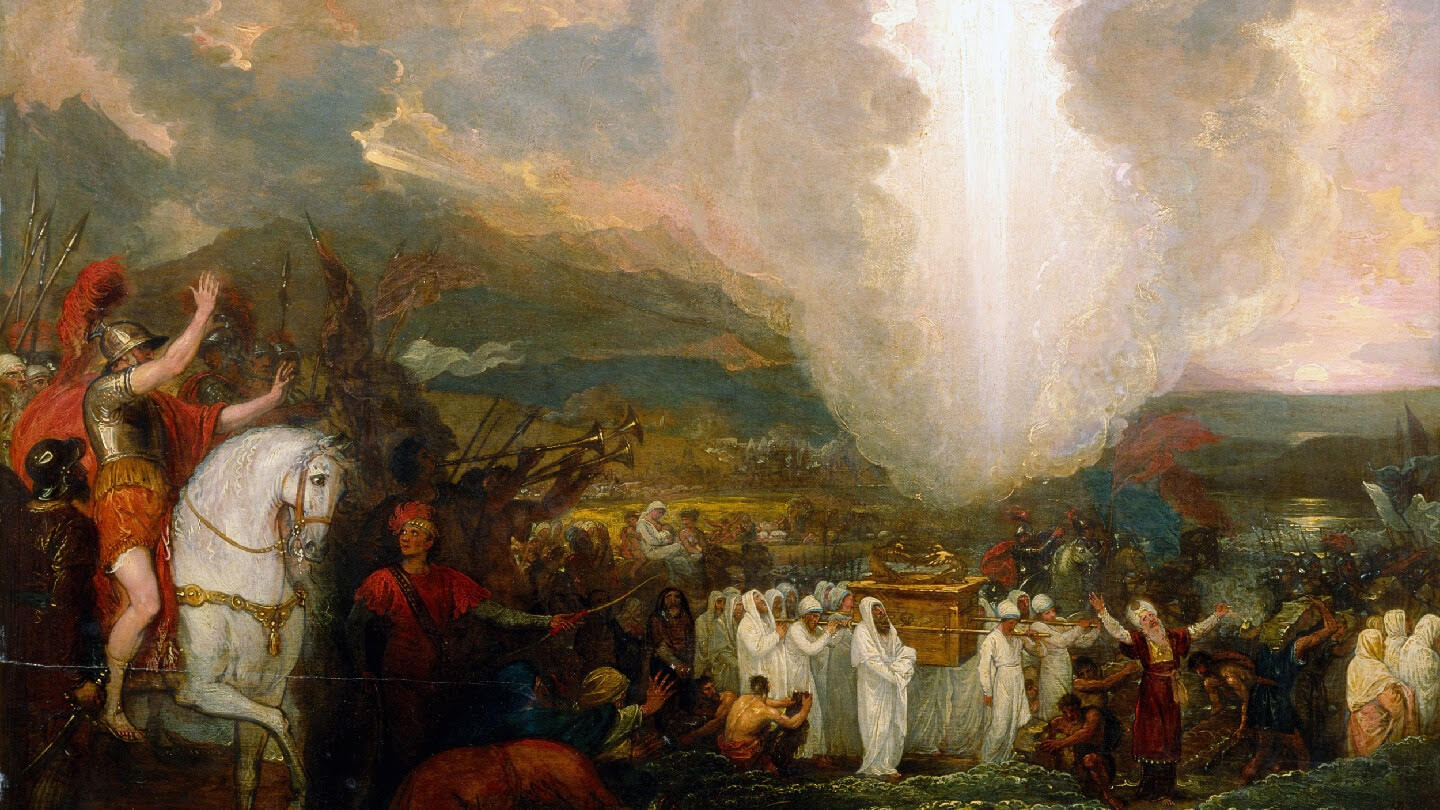
Under the leadership of Betzalel, Oholiav, and the skilled artisans, the people construct the Tabernacle and all its furnishings exactly as G-d commanded. The priestly garments are completed, and a full accounting is given of the gold, silver, and copper used in the work. Moses inspects everything, blesses the people, and finally the cloud of G-d’s presence descends upon the Mishkan.
The book closes with a magnificent image: G-d no longer revealed only from the mountaintop, but dwelling in the midst of the people themselves.
There is also a remarkable literary elegance here. The latter half of Exodus is framed almost like a grand theological mirror. At one end there is the cloud on Sinai. Then come the instructions for the Mishkan. Then comes Shabbat. Then, at the center, the rupture of the Golden Calf. And from there the pattern reverses: Shabbat appears again, then the actual building of the Mishkan, and finally the cloud returns — no longer on top of the mountain, but resting upon the sanctuary in the camp below.
The structure itself makes a point. The Golden Calf is the failed human attempt to bring G-d near on human terms. The Mishkan is the repaired and holy answer. The question of how G-d dwells among a people is not solved by panic, spectacle, or improvisation, but by covenant, discipline, sacred generosity, and obedience. That is not only a lesson in biblical architecture. It is a lesson in life.
Lessons for Israel
For the Jewish people, this parashah teaches that survival alone is never the end of the story. We are not redeemed merely to escape danger. We are redeemed to build.
The Golden Calf was not simply an act of idolatry. It was an act of panic, confusion, and spiritual impatience. The people wanted G-d’s presence, but they tried to force holiness on their own terms. They feared Moses was gone, feared the covenant had collapsed, feared Heaven had gone silent, and so they manufactured a substitute. That is often what panic does. It does not erase longing; it distorts it.
The Mishkan becomes the correction. It teaches that holiness is not created through frenzy. It is created through discipline, generosity, beauty, obedience, and sacred order. The answer to failed spirituality is not the abandonment of spiritual yearning. It is the refinement of it.
That remains a timeless lesson for Israel.
A people under pressure can easily become consumed by reaction, immediacy, and survival. And certainly Jewish history has given us more than enough reasons to remain alert. But Torah insists that Jewish destiny is not merely defensive. It is covenantal. It is civilizational. It is about building a society rooted in memory, law, holiness, responsibility, and shared purpose.
The cloud at the end of Pekudei reminds us that G-d’s presence rests not only in dramatic moments of rescue, but in the patient work of sacred nation-building. Not only in miracle, but in structure. Not only in revelation, but in a people capable of translating revelation into enduring life.
For Israel today, that is no small teaching. Strength is not only military readiness, political clarity, or technological brilliance. Those matter. But Torah reminds us that a nation’s deepest strength is also spiritual and moral — the ability to build a civilization where holiness has public expression, where law carries moral weight, where memory becomes purpose, and where the covenant remains alive in the conduct of national life.
And perhaps most moving of all: the same people who built the Calf were entrusted to build the Mishkan. Torah does not define us forever by our worst moments. It asks instead what we are prepared to build next. That may be one of the most Jewish truths of all. Failure is real. Sin is real. But so is repair. So is return. So is the possibility that the very hands that once helped fashion a false god may yet help fashion a sanctuary.
That is a message not only of accountability, but of hope.
Lessons for the United States
This week’s parashah also speaks clearly to the American experiment.
The genius of the United States was never freedom without limits. It was ordered liberty — freedom sustained by law, structure, accountability, covenantal habits, and a moral framework larger than self-interest. Exodus itself is not a story of escaping tyranny only to drift into disorder. It is a journey from oppression into responsibility.
That is where modern societies often struggle.
We live in an age that prizes spontaneity more than discipline, reaction more than reflection, volume more than wisdom, and self-expression more than self-command. Every boundary is treated with suspicion. Every institution is assumed to be corrupt until proven otherwise. Every form of restraint is declared oppressive by someone with a microphone, a grievance, and very often a podcast.
But Torah offers a far more mature vision. Freedom is not the absence of all limits. Freedom is the capacity to live responsibly within a framework that protects dignity, justice, and communal order. Liberty without moral architecture collapses into chaos. We do not have to look very far to see that.
When structure is mocked, when institutions are hollowed out, when trust is eroded, and when every common norm becomes optional, chaos enters quickly. And when chaos rises, people go shopping for golden calves — substitutes for truth, substitutes for patience, substitutes for principled leadership. Some worship power, some ideology, some celebrity, and some the far more common American idol of themselves.
The Torah offers another path. A free people must know how to build, not merely react. It must know that liberty survives only where restraint, responsibility, stewardship, and trust still matter.
And let us not miss the significance of Pekudei, the accounting. Moses gives a transparent record of what was given and how it was used. Even sacred work requires stewardship. Perhaps especially sacred work. The Mishkan may be holy, but its books are still balanced. That is a lesson for every nation and every institution: trust grows where accountability can be seen.
In that sense, Vayakhel-Pekudei is not only about a sanctuary in the wilderness. It is about the conditions under which free societies endure. Freedom exists where order rules. Not oppressive order. Not Pharaoh’s order. But covenantal order — the kind that allows liberty to flourish because it is bounded by duty, ethics, and a shared sense that we answer to something higher than ourselves.
Lessons for Ocean Reef
For Ocean Reef, this parashah reads almost like a blueprint for community life.
The Mishkan was not built by one gifted leader alone. Moses leads. Betzalel designs. Oholiav assists. The artisans labor. Men and women give. Everyone brings something. Holiness becomes communal when people offer their gifts toward a common purpose.
That is how real institutions are built.
No congregation, chapel, foundation, synagogue, church, or community thrives on goodwill alone. They endure because people bring time, talent, wisdom, resources, hospitality, patience, humor, good judgment, and on especially sanctified occasions, a willingness to attend one more committee meeting than they previously believed humanly possible.
One of my favorite moments in this portion is that the people give so generously that Moses has to tell them to stop. There is a sentence every development committee dreams of framing and hanging in the conference room. Imagine the annual campaign letter: “Thank you, dear friends. Kindly put your checkbooks away. We have more than enough.” One can dream. One should dream. It keeps the fundraising team emotionally stable.
But the point is serious. Sacred community flourishes when people give from the heart, not from coercion. The Torah repeats that theme again and again. Skill matters. Leadership matters. Planning matters. Excellence matters. But the beating heart of communal life is a willing spirit.
Strong communities are not built by improvisation. They are built by stewardship, transparency, collaboration, beauty, accountability, and the shared conviction that what we are doing matters. The same gold can build a calf or an ark. The same people can create confusion or covenant. The same energy can be expended on ego or on holiness. The difference is not material. It is purpose.
For our own community, that is an enduring truth. We are always deciding, collectively and individually, whether our efforts will produce noise or sanctuary. Whether our gatherings will reflect impulse or intention. Whether our institutions will drift or build. Vayakhel-Pekudei reminds us that sacred communities do not happen by accident. They are made — lovingly, deliberately, and together.
Personal Reflection
What moves me most in Vayakhel-Pekudei is that G-d does not give up on the people after the Golden Calf.
That matters.
The covenant was wounded, but it was not broken beyond repair. The people were given a path back — not through slogans, sentiment, or dramatic declarations, but through sacred work. Through contribution. Through accountability. Through craftsmanship. Through building.
There is something deeply hopeful in that.
Most of us know what it is to fail, to overreact, to misjudge, to let anxiety outrun wisdom. We know what it is to create messes we then must clean up — spiritually, personally, communally, and occasionally in the kitchen after one of those “this will only take a minute” projects that somehow involve six pans and a small disaster. Torah never pretends that human beings are above panic or folly. But neither does it leave us stranded in those moments. It asks a better question: now that the calf is behind you, are you ready to build the Mishkan?
That may be the great question of religious life.
When life feels disordered, do we add to the confusion or begin to build?
When the world feels loud, do we run faster or do we “make Shabbat”?
When trust is frayed, do we retreat into cynicism or recommit ourselves to sacred purpose?
When a failure has occurred, do we surrender to shame or turn toward repair?
The genius of this portion is that it teaches us holiness is not only found in extraordinary moments. It is found in patient faithfulness. In measured work. In the willingness to bring what one has and offer it well. In the discipline to stop when it is time to stop. In the humility to understand that G-d dwells not only in thunder, but also in order.
I find that deeply comforting.
We live in an age of endless motion and ceaseless commentary. Everything is urgent. Everything is breaking. Everyone has an opinion. Everyone is in a hurry. And yet here at the end of Exodus, Torah suggests that what the soul most needs is not more noise, but more sanctuary. Not more reaction, but more reverence. Not more chaos disguised as passion, but more order shaped by holiness.
Exodus ends by reminding us that the true measure of freedom is not simply leaving Egypt. It is what we build once we are free.
Closing Prayer
Master of the Universe,
As we come to the close of Sefer Shemot, we thank You for carrying us from bondage to freedom, from fear to faith, and from wilderness to Your presence.
Teach us to be builders of holiness.
When life feels chaotic, give us the wisdom to create order.
When our souls grow restless, teach us to make Shabbat — to sanctify time, honor rest, and make room for You in our lives.
When our communities are tested, help us bring our gifts with generous hearts, willing spirits, and steady hands.
Bless the people of Israel with strength, courage, protection, and peace.
Bless these United States with moral clarity, civic courage, and renewed unity.
Guard our nations from division without purpose, noise without wisdom, and power without conscience.
Bless our Ocean Reef community, our congregations, our families, and all who labor faithfully to build lives of meaning, beauty, generosity, and sacred purpose.
Chazak, chazak, v’nitchazek.
Be strong, be strong, and may we strengthen one another.
Amen
Shabbat Shalom
Dr Michael L Weiss PhD., HCCP
President Congregation Ocean Reef
Support Our Congregation
Please consider supporting our congregation so we may continue offering meaningful programs and community events. Your generous gift helps make this work possible.
Donate Now