
Parashat Bamidbar — In the Wilderness, We Learn How to Count
May 15, 2026 — 28 Iyar 5786 / Yom Yerushalayim
Commentary by Michael L Weiss Ph.D., HCCP
There are moments in the Torah when the scenery matters as much as the words.
The Book of Numbers does not begin in a palace, a city, a sanctuary, or even in the Promised Land. It begins bamidbar— in the wilderness. That is not incidental. It is the point.
The wilderness is where illusion falls away. It is the place between what was and what will be. It is where former slaves must learn how to become free people. It is where a crowd must become a community, where tribes must become a nation, and where faith must become more than memory. In the wilderness, there are no permanent walls to hide behind, no familiar routines to lean on, and no easy path forward. There is only the road, the uncertainty, the people around you, and the sacred center you choose to carry.
That is why the Book of Numbers is so important. It is not simply a book of censuses, lists, tribes, and journeys. It is the story of how a people learns to move through uncertainty without losing its soul.
And perhaps that is why Parashat Bamidbar feels so deeply relevant this week.
As we enter Shabbat we also mark Yom Yerushalayim, the day on the Hebrew calendar when we remember the reunification of Jerusalem — the city that has lived in Jewish memory, prayer, tears, conflict, and hope for thousands of years.
Jerusalem reminds us of destination. Bamidbar reminds us of the journey.
And today, in many ways, we too are in the wilderness. Israel continues to face enemies, grief, war, and the heavy moral burden of survival. America is walking through its own wilderness of division, impatience, anger, and distrust. Even here at Ocean Reef, as our season winds down and many prepare to return to homes across the country, we are reminded that a community must be more than a gathering of people who happen to share a beautiful place.
A community must know how to count one another.
That is where Bamidbar begins. G-d commands Moses to take a census of the Israelites — tribe by tribe, family by family, name by name.
At first glance, it can read like an ancient spreadsheet, and I will confess that after enough board meetings, any long list of numbers can begin to feel like a test of one’s spiritual endurance. But the Torah is never merely interested in statistics. The Torah is not counting heads. It is teaching us how to recognize souls.
The Hebrew phrase used for taking the census is “se’u et rosh”, often translated as “take a census,” but more literally meaning “lift up the head.” What a beautiful and powerful idea. To count someone properly is not to reduce them to a number. It is to lift their head. It is to say: you are seen, you matter, you have a place, and you have a responsibility.
That is the heart of Bamidbar.
The Israelites are preparing for the next stage of their journey. They are not yet home, but they are no longer slaves. They are somewhere in between — and perhaps that is where all real growth happens. They must learn how to organize themselves, how to travel together, how to protect one another, and how to place holiness at the center of the camp.
Rabbi Jonathan Sacks taught that the Book of Bamidbar is about the difficult journey from slavery to freedom, and that freedom is not simply the absence of bondage. Freedom requires responsibility, discipline, memory, and moral purpose. The Reform and Conservative traditions have also long understood the wilderness as a place of transformation — where individuals become a covenantal community, and where belonging is measured not only by privilege, but by obligation.
That is a lesson we need right now.
A Brief Synopsis of Parashat Bamidbar
Parashat Bamidbar opens the fourth book of the Torah, the Book of Numbers. The Israelites are still camped in the wilderness of Sinai, preparing for the long journey ahead.
G-d commands Moses to take a census of the Israelite men age twenty and older who are able to serve. Each tribe is counted separately, and the total reaches 603,550. The tribes are then arranged in an ordered formation around the Mishkan. Each tribe has its banner, its place, and its responsibility.
The Levites are counted separately and assigned to the care of the Mishkan. They are responsible for guarding, transporting, and maintaining the sacred center of Israel’s camp.
On the surface, this portion appears administrative. But beneath the counting and arrangement is a profound spiritual message: a people cannot survive the wilderness as a disorganized crowd. It needs structure, purpose, responsibility, and holiness at the center.
Bamidbar teaches us that everyone counts — but not in the cold sense of numbers. Everyone counts because everyone has dignity. Everyone has a place. Everyone has something sacred to carry.
What This Means for Israel
For Israel, Bamidbar speaks with deep and painful relevance.
Israel knows the wilderness — not only the physical wilderness of desert and stone, but the moral wilderness of danger, grief, uncertainty, and impossible choices. Behind every headline are not abstractions, but human beings: soldiers, reservists, parents, children, hostages, mourners, doctors, farmers, teachers, and families trying to hold themselves together.
Bamidbar reminds us that Israel is not merely a state. It is a people.
And like the tribes in the wilderness, Israel contains many camps: secular and religious, left and right, Ashkenazi and Sephardi, Mizrahi and Ethiopian, new immigrants and old families, Jews from every corner of exile. The miracle is not that all these tribes are the same. The miracle is that, at their best, they still gather around one shared sacred center.
On Yom Yerushalayim, that center is Jerusalem.
Jerusalem has never been simply real estate. It is memory. It is prayer. It is longing. It is the city our ancestors faced when they had no army, no flag, no passport, and no political power. It is the city that reminds us that Jewish history is not theoretical. It has stones, gates, cemeteries, markets, songs, tears, and a heartbeat that has never stopped.
Bamidbar calls Israel to be strong, but it also calls Israel to remember why strength matters. Strength is necessary to protect life. But strength without holiness can become harsh, and holiness without strength can become fragile.
Israel must carry both — courage and compassion, defense and dignity, power and purpose.
What This Means for the United States
For the United States, Bamidbar offers a different but equally urgent lesson.
We too are walking through a wilderness. Our public life has become too loud, too brittle, and too quick to turn human beings into categories. We count votes, polls, followers, donors, clicks, court decisions, market numbers, and cable news segments. We are very good at counting things. We are not always as good at lifting heads.
The Torah’s census teaches another way.
To count a person is to see their dignity before their label. It is to remember that before someone is a Republican or Democrat, conservative or liberal, Jew or Christian, Muslim or atheist, immigrant or native-born, they are a human being created in the image of G-d.
That does not mean we all have to agree. If agreement were required for community, most synagogue boards would not survive the first discussion of seating, music, or dessert. But disagreement does not have to become contempt. Difference does not have to become division.
Bamidbar reminds us that tribes can stand in different places and still face the same sacred center.
America needs that lesson. We need to recover the discipline of listening, the grace of restraint, and the humility to know that no one tribe owns the whole truth. Jewish life in America has always carried a dual calling: to preserve our own identity and to contribute to the moral life of the larger nation.
We do not serve America by disappearing into it. We serve America by bringing our Torah, our memory, our ethics, our humor, our stubborn hope, and yes, our well-earned capacity for argument into the American story.
A democracy, like the wilderness camp, cannot endure if every tribe thinks only of itself. It requires shared responsibility, moral seriousness, and the courage to keep holiness somewhere near the center.
What This Means for Ocean Reef
And then there is Ocean Reef — our own little camp in the wilderness, though admittedly one with golf carts, manicured landscaping, and far better air conditioning than Sinai.
As the season winds down, Bamidbar feels especially close to home. The Israelites are preparing to move, and so are we. Suitcases are coming out. Calendars are changing. People are planning their northern migrations. Some will return to homes across the country, and some will remain here through the summer heat with the quiet dignity of the truly committed — or perhaps the truly air-conditioned.
But this portion reminds us that community does not end when people leave the camp for a season.
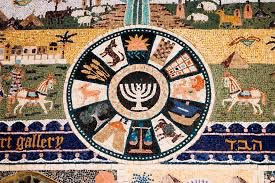
The tribes of Israel did not all stand in the same place. Each had its own banner, its own identity, and its own position. But they all faced the Mishkan. They all oriented themselves around something sacred.
That is a beautiful image for Ocean Reef.
We come from different cities, different backgrounds, different denominations, and different life stories. Some are Jewish, some are Christian, some are seekers, some are lifelong believers, and some are still negotiating with G-d, which is a very Jewish thing to do. Yet when we gather at the Chapel and Fellowship Center, we are reminded that sacred community is not built by sameness. It is built by shared purpose.
This year, we have seen something remarkable. We have seen Jews and Christians sit together, study together, celebrate together, mourn together, and learn from one another. We have seen people enter conversations with curiosity instead of suspicion. We have seen faith not as a wall, but as a bridge.
That should make us proud.
The Ocean Reef Chapel and Fellowship Center is, in many ways, our Mishkan. It is the sacred center around which our diverse community gathers. It does not erase our differences. It gives those differences a place to stand with dignity.
And Congregation Ocean Reef continues to fill an important and growing place in that sacred work. We are not simply hosting services and programs. We are building Jewish life. We are creating a place where people can pray, learn, remember, celebrate, question, laugh, grieve, and belong.
That is no small thing. In fact, it may be one of the most important things we do.
Bamidbar teaches us that every person has a place in the camp. Every tribe has a banner. Every soul has a task. And every community, if it is to survive the wilderness, must know what stands at its center.
For us, that center must be faith, dignity, compassion, generosity, and a commitment to one another.
Closing Reflection
Parashat Bamidbar begins in the wilderness because that is where real faith is formed.
It is easy to speak of community when life is calm. It is easy to speak of unity when everyone agrees. It is easy to speak of holiness when the sanctuary is full, the music is beautiful, the food is plentiful, and nobody has yet asked why their table is so far from the buffet.
But the Torah is more honest than that.
The Torah knows that life includes wilderness. Nations wander. Families struggle. Communities disagree. Leaders grow tired. People become afraid. The path forward is not always clear.
So G-d begins with a simple command: count them. Name them. Arrange them. Give them purpose. Place holiness at the center. Then begin the journey.
That is our charge as Jews. That is our charge as Americans. That is our charge as members of this remarkable Ocean Reef community.
And that is what gives this portion its quiet fulfillment. It does not promise that the wilderness will be easy. It does not pretend that the journey will be short. It simply reminds us that we do not walk alone, and that when holiness is placed at the center, even the wilderness can become a place of purpose.
May the One who makes peace in the heavens
bring peace upon us,
upon all Israel,
and upon all who dwell on earth.
And let us say: Amen.
Shabbat Shalom
Dr. Michael L Weiss Ph.D., HCCP
President Congregation Ocean Reef
Support Our Congregation
Please consider supporting our congregation so we may continue offering meaningful programs and community events. Your generous gift helps make this work possible.
Donate Now