
CONGREGATION OCEAN REEF
Torah Commentary
Parashat Beha’alotcha
When the Lamps Are Raised, and the People Begin to Fall
Commentary by Michael L. Weiss, Ph.D., HCCP
President, Congregation Ocean Reef
Friday, May 29, 2026 • 13 Sivan 5786
Shabbat, May 30, 2026 • 14 Sivan 5786
Numbers 8:1–12:16
There are weeks when the Torah feels ancient, and there are weeks when it feels as though Moses just walked into the room, turned on the television, read the morning headlines, and said, “Yes, this is exactly what I was talking about.”
This is one of those weeks.
We look out at the world and see uncertainty everywhere. The war with Iran seems to move in that terrible modern rhythm of escalation, pause, threat, retaliation, negotiation, and then escalation again. Israel remains on alert, the United States is pulled again toward the burdens of leadership in a dangerous region, and the shadow of Iran stretches through Hezbollah, the Gulf, the Strait of Hormuz, and across the anxious imagination of the world. It is on again, off again, but never truly gone. It is the kind of conflict that keeps families awake, markets unsettled, diplomats exhausted, soldiers vigilant, and people of faith praying with one eye open.
And then we open this week’s parsha, Beha’alotcha, and we find a people also on edge.
The Israelites are not in Tehran, Jerusalem, Washington, or Ocean Reef. They are in the wilderness. But spiritually, emotionally, and politically, they are standing in a place we recognize. They have left slavery. They have seen miracles. They have received Torah. They have been organized by tribe around the Mishkan. The cloud of G‑d’s Presence guides them by day, fire by night. The Ark moves before them. They are, astonishingly, only days away from the Promised Land.
“Everything should be hopeful.”
And yet, everything begins to unravel.
Isn’t that often how history works? Nations are rarely destroyed only by enemies at the gate. They are first weakened by confusion within the camp, by the loss of gratitude, by nostalgia for the wrong things, by leadership fatigue, by the inability to distinguish between hardship and abandonment.
Beha’alotcha begins with light. It ends with Miriam outside the camp. In between, the people who were being carried by heaven begin to complain about the menu.
Apparently, even miracles can become boring if served daily.
A Brief Synopsis of the Parsha
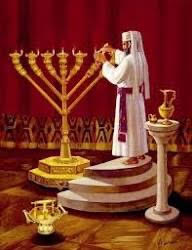
Beha’alotcha opens with the command to Aaron to raise the lamps of the menorah in the Mishkan. It is a beautiful image: light carefully kindled, not for spectacle, not for vanity, but for sacred purpose. The Levites are then dedicated to their service. The parsha introduces Pesach Sheni, the “Second Passover,” a remarkable act of divine compassion for those who were unable to bring the Passover offering at its proper time. In Judaism, even when one misses the first opportunity, G‑d often leaves a door open for return.
The Israelites then prepare to leave Sinai. The cloud lifts. The camp moves. The Ark goes before them. Moses says, “Arise, O Lord, and let Your enemies be scattered.” For a moment, it is majestic. The people are moving, the Presence is leading, and the land of promise is almost within reach.
Then comes the turn.
The people complain. At first, the Torah describes them almost strangely: k’miton’nim — like complainers, or perhaps, as some have suggested, like mourners. They are not merely hungry. They are unsettled. They miss something, but they do not quite know what they miss. Soon the complaint takes shape. They long for the fish, cucumbers, melons, leeks, onions, and garlic of Egypt. They reject the manna, the bread from heaven. Moses becomes overwhelmed by the burden of leadership. G‑d instructs him to gather seventy elders to share the weight of the people. Eldad and Medad prophesy in the camp, and Joshua worries, but Moses responds with generosity of spirit: “Would that all G‑d’s people were prophets.”
The people receive quail, but their craving brings disaster. Finally, Miriam and Aaron speak against Moses, and Miriam is stricken with tzara’at. Moses, with extraordinary humility, prays the shortest and most moving prayer in the Torah: “El na refa na la” — “Please, G‑d, please heal her.” The people wait for Miriam to heal, and only then do they journey forward.
It is a parsha of light, movement, complaint, craving, leadership, humility, punishment, and healing. In other words, it is not merely ancient history. It is Tuesday.
From Light to Complaint
The opening command is “Beha’alotcha et ha-neirot” — when you raise up the lamps. The Torah does not merely say “light the lamps.” It says raise them. Light, in Judaism, is not simply switched on. It is elevated.
That is not a bad lesson for our age. We have more light in the technological sense than any generation in history. Our phones glow, our screens glow, our homes glow, our dashboards glow, and yet the world often feels darker, more anxious, and more divided. The Torah reminds us that sacred light is not brightness. Sacred light is direction.
Aaron is commanded to tend the menorah with care. The light in the Mishkan does not come from accident. It comes from discipline, service, and humility. It must be raised.
That is the first great lesson of Beha’alotcha: before a people can travel well, they must know what kind of light guides them.
The Israelites had the cloud, the fire, the Ark, the Mishkan, Moses, Aaron, Miriam, the manna, and the promise of the land. They had more guidance than any people could reasonably expect. And still, they were restless.
“Because guidance is not the same as gratitude.”
The Manna and the Old Temptation of Control
The heart of this parsha, to me, is the complaint about the manna.
The Israelites say, in effect, “Our souls are dried out. There is nothing at all except this manna.”
Nothing at all — except food delivered daily from heaven.
That is like saying, “We have nothing to eat except the chef’s tasting menu at the Ritz.” But the Torah is not mocking them. It is diagnosing something very deep in the human soul.
The people do not simply want meat. They want control. They want to feel normal again. They want to choose, possess, process, and manage their own food. They remember Egypt not as slavery, not as brutality, not as whips and tears, but as a place of fish, cucumbers, melons, leeks, onions, and garlic.
It is amazing how memory works when gratitude fails. Yesterday’s oppression becomes today’s nostalgia. Egypt becomes a delicatessen.
The manna was bread from heaven. That phrase itself is almost a contradiction. Bread is normally human food, made by labor — harvested, ground, mixed, kneaded, baked. After Eden, Adam is told that by the sweat of his brow he will eat bread. Bread is the food of exile, effort, and human control.
But here, in the wilderness, G‑d gives Israel bread without sweat. Manna is heaven’s answer to Eden’s wound. In the Garden, humanity rejected G‑d’s gift and reached for control. In the wilderness, G‑d says, in effect: I will feed you again. I will sustain you again. You do not yet need to control everything. You are not yet in the land. You are still being formed.
The people could not bear it.
They took the manna and ground it, pounded it, boiled it, baked it into cakes. Now, there is nothing wrong with cooking. I am certainly not opposed to a good meal, and anyone who has traveled with me knows that I consider garlic less a seasoning than a close personal friend. But here the Torah is pointing to something more subtle. The people are not merely improving a recipe. They are resisting dependence. They are uncomfortable receiving what they did not earn, did not control, and could not store beyond the day.
And that is still one of the great spiritual struggles of modern life. We are very good at building, managing, improving, investing, strategizing, and controlling. These are not bad things. Ocean Reef itself is a monument to planning, discipline, excellence, and perhaps a few committee meetings that could have been emails.
But there are moments when G‑d asks us not to control, but to receive.
“To receive life. To receive love. To receive mercy. To receive responsibility. To receive one another.”
The Garden in the Wilderness
There is a profound echo between Eden and Beha’alotcha.
In Eden, G‑d provides food directly. Humanity rejects the boundary and reaches for mastery. The result is exile, mortality, and bread by the sweat of the brow. In the wilderness, G‑d again provides food directly. This time it is not fruit from trees, but bread from heaven. It is as if G‑d says: let us try again. Let Me nourish you. Let Me teach you trust.
The Ark, adorned with cherubim, moves before Israel. In Genesis, cherubim guard the way back to Eden. Here, the cherubim on the Ark lead the way forward to the Promised Land. The very figures that once blocked humanity from the Garden now guide Israel toward a new garden — the Land of Israel.
And then the people complain.
The tragedy is not that they are hungry. Hunger is human. The tragedy is that they mistake dependence for humiliation. They cannot yet see that being cared for by G‑d is not weakness. It is formation.
A child in the womb does not survive by independence. A nation in the wilderness does not survive by pretending it is already fully formed. There are stages in life when we are meant to be carried. There are times when G‑d gives us manna, not because we are helpless forever, but because we are not yet ready for the field.
That is hard for strong people to accept. It is hard for successful people. It is hard for leaders, builders, entrepreneurs, physicians, lawyers, generals, CEOs, parents, grandparents, and, dare I say, even a few Ocean Reef members who have never met a problem they did not believe could be solved with a spreadsheet, a committee, and the right person on the phone.
But Beha’alotcha teaches that not every wilderness can be managed. Some must be endured. Some must be sanctified. Some must be walked through one day’s portion of manna at a time.
What This Means for Israel
For Israel, Beha’alotcha is painfully relevant.
Israel knows what it means to travel under threat. It knows what it means to be surrounded by enemies, to rely on vigilance, to bury its dead, to defend its borders, and still to raise lamps. The modern State of Israel is, in many ways, a nation that has lived with the Ark moving before it and danger moving beside it.
The on again, off again war with Iran is not merely a military matter. It is a spiritual test of endurance. Iran’s regime has made hostility to Israel part of its identity, and Israel must respond with strength, clarity, and courage. But the Torah reminds us that even when enemies are real, the inner life of the camp matters.
The Israelites were not defeated in Beha’alotcha by Amalek, Moab, or Pharaoh. They began to fall when they lost the ability to see manna as a gift.
For Israel today, that means the defense of the nation must be joined to the defense of its soul. Military strength is essential. Intelligence, deterrence, alliances, and resolve are essential. But so too are unity, humility, gratitude, and compassion. A people cannot live forever on emergency alone. It must also know why it is living, what light it is raising, and what kind of society it is building when the sirens stop.
“The menorah comes before the march. Light before movement. Purpose before power.”
Israel must be strong enough to defeat its enemies, but wise enough not to become defined only by them.
What This Means for the United States
For the United States, Beha’alotcha speaks to the burden of leadership.
Moses reaches a breaking point in this parsha. The people complain, and he essentially says to G‑d: I cannot carry them alone. Any leader who has ever served a community, a board, a congregation, a company, a family, or a country understands that sentence. Leadership can be lonely. Leadership can be exhausting. Leadership often means being blamed for the weather, the menu, the seating chart, and occasionally the behavior of people who were adults before you arrived.
G‑d’s answer is not to tell Moses to toughen up. G‑d tells him to gather seventy elders. Share the burden.
That is a vital lesson for America. In a time of international instability, domestic division, and moral fatigue, no single leader, party, institution, or branch of government can carry the burden alone. A healthy nation requires distributed responsibility. It requires elders — not merely in age, but in wisdom. It requires people who understand that public service is not performance. It is sacrifice.
The United States, like Israel in the wilderness, is tempted by nostalgia. We hear versions of “remember Egypt” in every generation. People remember a simpler past that was never quite as simple as remembered. The Torah does not forbid memory. Judaism is built on memory. But it warns us against dishonest memory — the kind that remembers the cucumbers and forgets the chains.
America’s great task is not to return to some imagined Egypt. It is to move forward with courage, humility, and moral seriousness. Freedom is not sustained by complaint. It is sustained by responsibility.
What This Means for Ocean Reef
For our Ocean Reef community, Beha’alotcha is a reminder that sacred communities do not simply happen. They are tended, like lamps.
We are blessed to live in a place of extraordinary beauty, talent, generosity, and accomplishment. We have people here who have built companies, healed patients, argued cases, led institutions, flown missions, served our nation, raised families, created opportunities, and given generously to causes larger than themselves. Ocean Reef is not merely a club. At its best, it is a community of memory, service, friendship, and faith.
But even blessed communities can become places of complaint if we are not careful.
The Israelites had manna and saw monotony. They had the Ark and saw inconvenience. They had freedom and remembered Egypt’s menu. We should be cautious before judging them too harshly, because we too can become accustomed to blessings. The extraordinary can become ordinary. The gift can become expectation. The miracle can become background noise.
That is why our Chapel and Congregation matter so deeply. They help us raise the lamps again. They remind us that unity is not automatic. Interfaith friendship is not automatic. A thriving Jewish life at Ocean Reef is not automatic. A Chapel that serves as the spiritual heart of this community is not automatic. These blessings are manna. They must be received with gratitude and sustained with care.
The parsha also teaches us about leadership. Moses could not carry the people alone. Neither can any rabbi, minister, chaplain, board chair, volunteer, donor, or committee member. Sacred community requires shared burden. It requires people willing not only to attend, but to build; not only to enjoy, but to serve; not only to comment, but to carry.
And yes, sometimes it requires fewer complaints about the manna and more gratitude that there is food on the table.
The Healing Prayer
Near the end of the parsha, Miriam is stricken after speaking against Moses. The moment is painful. But Moses does not answer insult with revenge. He does not say, “Well, she had it coming.” He does not write a sharply worded email, copy the entire board, and attach documentation.
Instead, Moses prays.
“El na refa na la.”
“Please, G‑d, please heal her.”
Five Hebrew words. No speech. No drama. No self-justification. Just mercy.
That is the humility of Moses. The Torah tells us he was the humblest person on earth, and here we see why. Humility is not weakness. Humility is strength without ego. It is the ability to pray for someone even after they have hurt you. It is the ability to care more about healing than being right.
In a world filled with conflict — from Iran to Israel, from Washington to our own communities — we need more of that prayer. We need fewer people proving they are right and more people asking G‑d to help us heal.
Closing Reflection
Beha’alotcha begins with raised lamps and then shows us how quickly a people can lose sight of the light.
The Israelites were not evil people. They were frightened people, tired people, newly free people, people still learning how to trust. They wanted control because control feels safer than faith. They wanted Egypt’s food because slavery, from a distance, can look strangely organized. They wanted to be normal because being chosen is exhausting.
But the Torah calls us to something higher.
It calls us to receive manna when manna is given. To raise light when the world grows dark. To share leadership when the burden becomes too heavy. To remember that not every desire deserves to be fed. To pray for healing even when wounded. To move forward, not backward. Toward the land, not toward Egypt. Toward gratitude, not complaint. Toward sacred responsibility, not spiritual nostalgia.
This week, as the world trembles again with war and uncertainty, may we be people who raise the lamps. May Israel be protected. May America act with wisdom. May our Ocean Reef community continue to be a place where faith is honored, differences are respected, and unity is not a slogan but a sacred practice.
And may we learn to recognize the manna in our lives before we complain about the menu.
עֹשֶׁה שָלוֹם בִּמְרוֹמָיו, הוּא יַעֲשֶׁה שָלוֹם עָלֵינוּ, וְעַל כָּל יִשְׂרָאֵל, וְעַל כָּל יוֹשְׁבֵי תֵבֵל, וְאִמְרוּ אָמֵן.
May the One who makes peace in the heavens bring peace upon us, upon all Israel, and upon all who dwell on earth. And let us say: Amen.
congregationor.org
Support Our Congregation
Please consider supporting our congregation so we may continue offering meaningful programs and community events. Your generous gift helps make this work possible.
Donate Now