
Parshat Vayeira
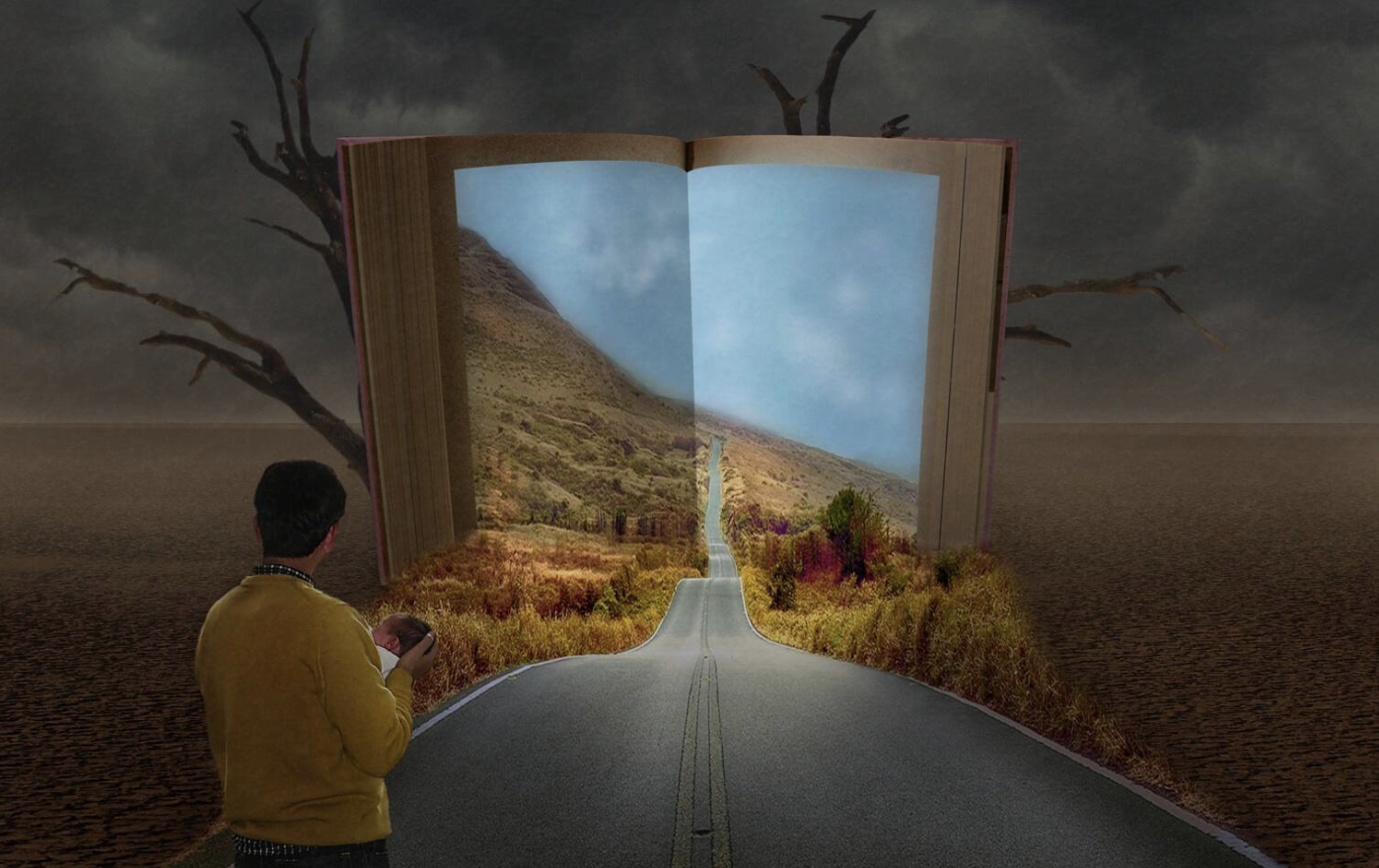
The Path Back to the Garden
November 7, 2025 | 16 Cheshvan 5786
Genesis 18–22
Entering Our Own Garden of Eden
As Cheryl and I made our way back to Ocean Reef for the season — after the familiar gauntlet of Miami Airport (which, if Dante had known, would’ve made an excellent Tenth Circle), navigating the Florida Turnpike with its… shall we say, ambitious drivers (the lane-weavers, the left-lane campers, and the folks auditioning for “Fast & Curious”) — and that lonely stretch of Card Sound Road that makes you question all your life choices — we finally passed through the gates.
And then… that moment of peace. The air softens, the palms whisper, and one can almost imagine an angel or two at the Reef entrance, guarding not with flaming swords but with golf carts and security passes. Welcome home, they seem to say. You’ve made it through the wilderness back to the Garden.
So —with that backdrop welcome to my Parshat Vayeira commentary. This week’s portion offers us the ancient coordinates back to Eden itself — not the place, but the path. It’s a story of hospitality and cruelty, of divine justice and human compassion, of angels who visit tents and cities that destroy themselves. It asks the same question I asked back in Bereshit: Who will give meaning to the world God created?
A Brief Synopsis
Parshat Vayeira (Genesis 18–22) reads like one of those weeks when life throws everything at you—faith, fear, laughter, heartbreak, and ultimately, revelation. It begins with Abraham, ever the gracious host, rushing to greet three strangers in the desert sun—only to discover they are messengers of God, bringing the astonishing news that Sarah, well past her childbearing years, will soon have a son. From that moment, the pace quickens: Abraham bargains passionately with God to save Sodom, Lot and his family flee a city consumed by moral decay, and Sarah finally laughs with joy at Isaac’s birth. Yet the joy turns to anguish as Abraham faces his greatest test—the Binding of Isaac—where faith collides with reason, and trust becomes the only path forward. Through it all, Vayeira reminds us that to see God’s presence (“and He appeared”) often means stepping into discomfort, questioning, and courage—the same timeless dance between belief and humanity that defines us still today.
The Lost Path and the Garden Gate
Vayeira, like many of our Torah readings, connects us back to the earliest stories. We see the same themes repeating — exile and return, faith and failure, the search for moral balance. When I wrote on Lech Lecha, I spoke of trusting the unknown — that uncomfortable space where faith replaces control. In Noach, we saw renewal after destruction. And in Bereshit, we learned that humanity’s purpose is not to live in Eden, but to walk toward it, one act of righteousness at a time.
Here again, in Vayeira, we find that ancient “path to the Tree of Life.” After Adam and Eve are banished, angels stand guard, “lishmor derech etz ha-chayim” — to guard the way. Later, God tells Abraham He has chosen him to “keep the way of the Lord, to do righteousness and justice.” (Tzedakah u’mishpat.)
It’s as if the Torah whispers, This is the way back. Not through gates, but through goodness. Not with angels, but through action.
Sodom and the Institutionalization of Evil
Now, I must admit — as I began unpacking the boxes I had shipped to the boat, thinking I’d cleverly sent down “essentials,” I kept finding Jewish reference books. One after another. Rashi, Plaut, Sacks… all carefully bubble-wrapped, as if to remind me that Torah study is a carry-on, not cargo. I laughed and said to myself, “Ah, so that’s where I put them!”
And wouldn’t you know it — as I started flipping through those pages, my thoughts for this week’s Parsha began to take shape. Perhaps it was divine humor at play, reminding me that sometimes inspiration doesn’t come from the heavens, but from a dusty box marked ‘Books — fragile, open carefully.
As I read about Sodom and Gomorrah, I can’t help but think of how quickly a paradise can decay when kindness becomes optional. The Rabbis remind us that Sodom’s sin wasn’t mere immorality — it was cruelty made lawful. They banned generosity. They punished kindness. They believed fairness existed only for themselves.
If Eden’s mistake was individual — the choice of one man and woman — Sodom’s was societal. Evil had become policy. And as I joked once in a previous commentary, the Torah never gives us villains twirling mustaches — it gives us bureaucrats with clipboards.
When Abraham argues with God for the city’s salvation, he becomes humanity’s advocate — the first to suggest that God’s justice must be balanced with mercy. He reminds the Eternal that numbers don’t make righteousness; actions do. And in that conversation, Abraham shows us how to live in a divided world: to reason, to speak up, to seek fairness without surrendering compassion.
The Balance of Tzedek and Mishpat
Over the last few weeks, I’ve written about faith (Lech Lecha), humility (Noach), and purpose (Bereshit). This week adds a fourth: balance.
Tzedek — righteousness — is personal. It asks, “What is right for this person before me?”
Mishpat — justice — is societal. It asks, “What is fair for all?”
One without the other is distortion. A world of only mishpat becomes cold; a world of only tzedek becomes chaos. Sodom had laws but no heart; Noah’s world had heart but no laws. Only Abraham seeks both.
That tension — between law and love — defines every civilization, every family, every congregation. And, if we’re honest, every HOA board meeting.
What This Means for Israel
Israel today stands as both Abraham’s heir and his mirror. Like Abraham, it wrestles daily with moral complexity — defending life while yearning for peace. Reform and Conservative scholars alike remind us that tzedek and mishpat were meant to coexist, not compete. Justice ensures survival; righteousness ensures soul.
When Israel faces the challenge of balancing security with compassion — of sheltering the innocent while confronting evil — it is walking that ancient path between Eden and Sodom. Each debate in the Knesset, each soldier’s moral choice, each prayer at the Kotel echoes Abraham’s plea: “Shall not the Judge of all the earth do justice?”
But justice must be tempered by humanity. Our ancestors taught that to be a “light unto the nations” means shining not only through strength, but through mercy — not by perfection, but by persistence.
Israel remains that stubborn flicker of divine hope that insists, even after exile and war, that life and goodness must prevail.
What This Means for the United States
Here in America, we face our own Sodom moments — not with fire and brimstone, but with polarization, outrage, and the growing inability to see one another as neighbors. The recent New York City mayoral race was more than a local contest; it became a barometer of the American soul. New York has long been a city where Jews found both refuge and responsibility — where our grandparents built lives of purpose from the cobblestones of Ellis Island to the benches of Central Park. Yet this election laid bare a troubling truth: civility is eroding, extremism is rising, and even in the most diverse of cities, hate can find new homes.
The campaign’s rhetoric — its flirtation with division and identity politics — reminded us that antisemitism is not the relic of another time; it is the echo that refuses to fade. We see it on campuses, in politics, and in the silence of those who should know better.
So, what do we do as Jews — as Americans — standing at this moral crossroads?
We listen carefully, not to agree with every voice, but to discern truth from noise.
We respond courageously, not with anger, but with conviction, civility, and the wisdom of our tradition.
And most importantly, we protect — fiercely and faithfully — all that we have built in this country.
We protect our synagogues, not just with security, but with song. We protect our freedom, not through fear, but through participation — by voting, by leading, by teaching our children why liberty matters.
We protect our neighbors, because the Torah commands us to.
And we protect our dignity by refusing to become the very bitterness that seeks to divide us.
Our founding fathers — much like our patriarch Abraham — understood that law without morality is tyranny, and freedom without responsibility is chaos. The Constitution, like Torah, demands that we guard the way: not as spectators, but as stewards.
As Jews in America, we have flourished not only because of the opportunities this nation offers, but because we contributed to its moral architecture — its schools, its hospitals, its philanthropy, its conscience. The lesson of Vayeira reminds us that we cannot simply dwell in the comfort of our own tents; we must open the flaps wide to the world, to offer light where darkness gathers.
So as another election season begins to churn with rhetoric, emotion, and division, our task is to be the still, steady voice of reason — a community grounded in faith and fortified by unity. Our protection lies not in isolation but in involvement; not in retreat, but in reaffirming that the values of justice, compassion, and covenant still bind this great nation together.
To stand for America, at its best, is to walk the very path of tzedek u’mishpat that Abraham discovered — the path back to the Tree of Life.
What This Means for Ocean Reef
Now, let’s bring it home — literally — to our small corner of paradise. Ocean Reef, for all its beauty, is also a microcosm of the world. We have wealth, wisdom, diversity, and — let’s be honest — opinions as numerous as golf carts.
But what a gift that is. Every act of generosity here — every scholarship, every Chapel and Congregation donation, every dinner shared with someone new — is part of guarding that same “path to the Tree of Life.” We are, in our own way, Abraham and Sarah at the tent, welcoming the stranger, not knowing which guest might be an angel.
Our challenge this season — as we rebuild programs, strengthen our congregation, and engage our neighbors — is to live that balance. To make sure our success doesn’t isolate us, but inspires us. That our gates don’t just protect us; they remind us to open our hearts wider.
If Sodom was destroyed for turning guests away, let Ocean Reef be remembered for inviting souls in.
Building Unity in a Divided World
In an increasingly fractured world, what can we — as Jews, as people of faith, as members of this extraordinary community — actually do?
We can begin with Abraham’s example: keep talking to God, even when we disagree with Him. Keep standing up for others, even when it’s unpopular. Keep walking the path — derech etz ha-chayim — with humility, humor, and hope.
And maybe, just maybe, keep a little perspective. If we can survive Miami Airport, the Turnpike, and Card Sound Road — and still arrive with a smile — then surely we can handle a divided world with patience, purpose, and maybe a nice Chardonnay at the Islander.
Closing Thoughts
In Eden, humanity hid. In Sodom, humanity hardened. But Abraham — he engaged. He argued, prayed, hosted, loved. That is our inheritance.
If each of us can bring a little more tzedek into our justice, a little more mishpat into our compassion, we’ll find that the path to the Tree of Life isn’t somewhere far away — it’s right here, between each other.
A Prayer for Peace
יִתֵּן ה’ עֹז לְעַמּוֹ; יְבָרֵךְ אֶת עַמּוֹ בַשָּׁלוֹם
May the One who grants strength to His people bless His people with peace.
May He bring peace to Israel, to the United States, and to our beloved Ocean Reef.
And may we continue — through acts of generosity, courage, and humor — to guard the way to the Tree of Life.
Shabbat Shalom
Michael L. Weiss, PhD., ABD, HCCP
President, Congregation Ocean Reef
Support Our Congregation
Please consider supporting our congregation so we may continue offering meaningful programs and community events. Your generous gift helps make this work possible.
Donate Now