
Parshat : Vayikra
March 20, 2026 | 2 Nisan 5786
Torah Reading: Leviticus 1:1–5:26
Commentary by Michael L. Weiss, Ph.D., HCCP
Welcome to Parshat Vayikra.
Welcome, also, to Leviticus.
I know. I can already hear the collective sigh from here.
“Leviticus? Really? With everything going on in the world, we are going to talk about animal sacrifices?”
Yes. We are. And I promise you, it is exactly what we need.
Because before we dismiss Vayikra as an ancient manual for priests with too much time on their hands and a troubling familiarity with livestock, we ought to pause and recognize the moment in which we find ourselves. I write these reflections a week in advance, and as I put these words to paper, it is March 17, 2026 — day thirteen of a war that no one fully anticipated and yet, if we are honest, many of us knew was always lurking on the horizon.
On February 28, the United States and Israel launched Operation Epic Fury, a coordinated military campaign against Iran’s nuclear infrastructure, ballistic missile capacity, and the command-and-control structure of the Islamic Revolutionary Guard Corps. In the opening strikes, Supreme Leader Ali Khamenei was killed. His son, Mojtaba, has been named successor, which is Tehran’s way of telling the world that even when decapitated, tyranny is still perfectly capable of finding another head.
Iran responded with fury of its own. Ballistic missiles over Tel Aviv. Drone attacks on American assets in Bahrain, Kuwait, and Qatar. The Strait of Hormuz effectively choked shut. Oil prices surging. Russia quietly passing along tactical assistance to Tehran. The United Nations warning of toxic fallout and environmental catastrophe over civilian zones. More than 1,300 Iranian civilians reported dead. At least 13 Israelis killed. Eight American soldiers lost.
And then, this morning, here at home, a man drove a truck through the front doors of Temple Israel in West Bloomfield, Michigan — the largest Reform synagogue in the United States — exited with a rifle, and was stopped only because trained synagogue security acted with extraordinary bravery. One security officer was hospitalized. One hundred and forty children in the early childhood center were evacuated safely. Their teachers, who kept those children calm in the midst of terror, deserve not only our gratitude, but our admiration and our prayers.
This was terrorism. Directed at Jews. In America. Today.
And so, yes, we begin Leviticus.
If ever there were a week for Vayikra, it is this one.
Because Vayikra is not, at its deepest level, a book about slaughter. It is a book about approach. About what human beings do after the crisis, after the failure, after the fear, after the smoke. It is a book about how we bring ourselves — broken, frightened, bewildered, humbled — back into relationship with the Divine.
The Hebrew word at the center of this parsha is korban, usually translated as “sacrifice.” But that translation, while convenient, misses the point entirely.
Korban means to draw near.
And this week, my friends, we draw near.
A Brief Synopsis of Parshat Vayikra
Leviticus 1:1–5:26
The Book of Leviticus opens quietly, almost gently:
Vayikra el Moshe — “And He called to Moses.”
Not thundered. Not commanded in fury. Not shattered the heavens again as at Sinai. He called.
And in the Torah scroll, the final letter of the word Vayikra — the aleph — is written smaller than the rest. The sages understood this as a sign of Moses’ humility. Even after all he had seen, all he had endured, all he had become, Moses still made himself small before God.
That alone is worth pausing over.
We live in an age that rewards volume, spectacle, performance, and self-importance. Everyone is broadcasting. Everyone is branding. Everyone is one podcast away from declaring themselves a prophet. And then Vayikra arrives and says: holiness begins with humility. With listening. With the quiet willingness to be called.
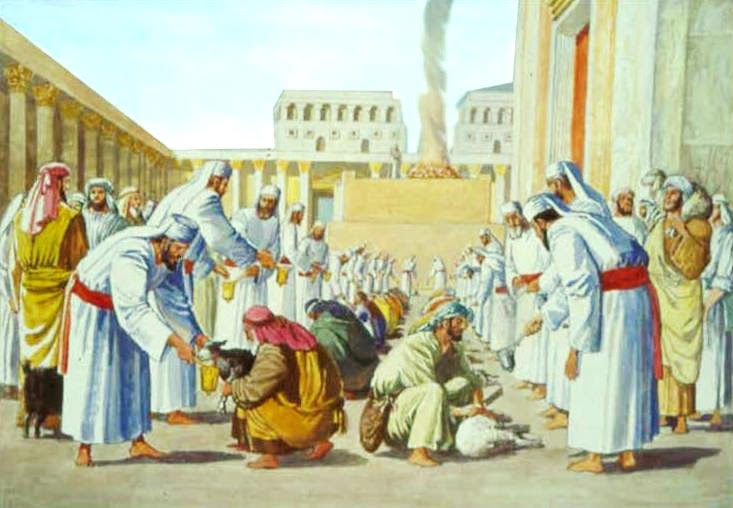
What follows is the system of korbanot, the sacrificial offerings:
The Olah, the Burnt Offering, is entirely consumed by fire. Nothing is retained. Everything is given.
The Mincha, the Grain Offering, is the humble offering. Flour, oil, frankincense. Accessible even to the poorest among the people. You need not be wealthy to draw near.
The Shelamim, the Peace Offering, is shared. God, priest, and offerer all partake. It is the offering of wholeness, gratitude, and communion.
The Chatat, the Sin Offering, addresses unintentional wrongdoing. The Torah knows what modern people sometimes forget: we do damage not only when we are malicious, but when we are careless.
The Asham, the Guilt Offering, concerns guilt we knew about — the wrong we did and rationalized, the truth we suppressed, the responsibility we dodged.
This is not primitive religion. This is moral architecture.
Rabbi Jacob Milgrom, one of the great Conservative scholars of Leviticus, argued that the sacrificial system was ancient Judaism’s method of moral and psychological repair. Before psychotherapy, before self-help publishing, before every emotionally confused person on television insisted on “living their truth,” the Torah already understood that guilt, gratitude, grief, and moral failure require form. Ritual helps the soul tell the truth.
And Rabbi Richard Levy of the Reform movement reminded us that when the Temple was destroyed, Judaism did not abandon this inner grammar. It transformed it. Prayer became sacrifice. The synagogue became altar. The lips took the place of the lamb. But the purpose remained the same:
Draw near.
Come closer.
Do not stay away because you think you are too bruised, too frightened, too guilty, or too small.
That is the genius of Vayikra. When the world feels furthest from decency, the Torah says: come close anyway.
What This Means for Israel
Think about what Israel has just done.
It launched the largest military operation in its modern history against a regime that has spent more than four decades funding terror, building proxy militias, preaching annihilation, advancing nuclear capabilities under the cover of diplomacy, and saturating the region with instability. This was not some sudden misunderstanding between polite neighbors. Iran has declared its intentions clearly and often. Israel heard those intentions and, this time, acted before the funeral invitations could be written.
That is not aggression. That is survival.
And yet, the hatred Iran exports does not stay in Tehran. It does not politely remain within Persian borders. It travels. It metastasizes. It inspires. It radicalizes. It arrives in places like West Bloomfield, Michigan, where Jewish preschool children suddenly find themselves part of the same story as families huddling in shelters in Tel Aviv.
Vayikra speaks to Israel’s condition with remarkable clarity.
The Olah — wholly consumed, with nothing held back — reflects what Israel has always been asked to place on the altar. Its sons and daughters. Its reserve soldiers. Its parents. Its sense of normalcy. Its very breath. Israel is a country that has too often had to give everything merely to remain alive.
Rabbi Jonathan Sacks, of blessed memory, noted that Israel is perhaps the only nation in modern times forced to defend its right simply to exist in nearly every decade of its life. That is not normal. It should never be normalized. And yet Israel has not only endured, it has built, healed, innovated, argued, laughed, planted, studied, and sung in defiance of those who wished it gone.
There is also in Israel’s story the spirit of the Mincha, the humble grain offering. Because Israel’s strength is not merely in its missiles or intelligence capabilities. It is in the sanctity of ordinary lives. The grandmother in Haifa. The child in Be’er Sheva. The immigrant from Ethiopia. The young reservist pulled away from graduate school or a start-up or a toddler at home. Every one of those lives matters. Every one of them is worth bringing before the altar of history and declaring: this life has value.
And then there is the Chatat, the offering for unintended wrong. No decent nation can wage war without confronting the tragedy of collateral suffering. War produces innocent dead, shattered families, and scenes that linger in the conscience. What distinguishes a moral society is not perfection. No society at war gets perfection. What distinguishes a moral society is whether it wrestles, examines, investigates, grieves, and holds itself accountable when unintended harm occurs.
That struggle matters.
Israel now stands at one of those rare hinges in history when decisions made in days will shape generations. What emerges from this conflict — militarily, politically, morally, spiritually — may define the region for the next fifty years.
I have faith in Israel.
Not sentimental faith. Not naïve faith.
Argued faith.
Earned faith.
Covenantal faith.
What This Means for the United States
Let me say this plainly to my fellow Americans, no matter which political tribe claims your zip code, your cable preferences, or your Thanksgiving arguments:
A man drove a truck through the doors of a synagogue this morning.
In America.
In 2026.
Not in some sepia-toned history documentary narrated in ominous tones. Not in Europe in the 1930s. Not in a place where freedom of religion is theoretical and constitutional promises are decorative. Here. In the United States of America.
Temple Israel in West Bloomfield represents precisely the kind of Jewish life that should be entirely unremarkable in this country: vibrant, open, dignified, rooted, American, secure in its place under the shelter of liberty. And yet it was attacked.
Security prevented a massacre. Thank God for that. Thank God for trained, prepared, professional personnel who did what needed to be done.
But let us also say the thing that must be said: houses of worship should not have to function like hardened targets. Preschool teachers should not need to become amateur tacticians. Rabbis should not have to think like counterterrorism consultants before they think like rabbis.
And yet here we are.
The Asham, the guilt offering, is the offering for what we knew and failed to address. The wrong we understood but postponed confronting. The danger we saw but filed away beneath some bureaucratic stack of “ongoing concerns.” America has been warned for years that antisemitic violence is rising. We saw Pittsburgh. We saw Poway. We saw threats, harassment, vandalism, intimidation, and the normalization of rhetoric that would have once caused universal disgust and now too often merely causes a panel discussion.
How many warnings are enough?
How many bulletins?
How many broken windows, painted swastikas, bomb threats, security grants, traumatized congregants, and frightened children before antisemitism is treated not as an occasional cultural inconvenience, but as a national moral emergency?
And while all of this unfolds, American service members are once again in harm’s way in a widening regional war. Eight soldiers already gone. Families already altered forever. If a nation asks that kind of sacrifice of its men and women in uniform, then it owes them moral clarity.
What are we fighting for?
We are fighting — or ought to be fighting — for a world in which synagogues are not fortresses. In which Jews are not told, subtly or otherwise, that their visibility is a liability. In which minority communities do not stand alone when hatred comes through the front door.
That is where the Shelamim, the peace offering, becomes instructive. It was shared among God, priest, and people. No one stood outside the covenant of responsibility.
So too in America. Government, civil society, and religious institutions must all be present. All accountable. All invested.
No Jewish community should bear this burden alone.
No congregation should have to become its own foreign ministry, intelligence bureau, and emergency response team.
And no political party gets to claim that antisemitism belongs exclusively to the other side.
It belongs to evil. And evil must be confronted.
What This Means for Our Community at Ocean Reef
And now we arrive where we always must: here. Home. Ocean Reef.
The palms are still swaying. The water is still shimmering. The herons remain gloriously indifferent to geopolitics. Paradise has a way of making people believe that distance equals insulation. It does not.
Every so often someone will ask, with understandable sincerity, “Does all of this really affect us down here?”
And every time I resist the urge to answer with only my eyebrows.
Yes. It affects us. Deeply.
Because Jewish identity is not geographic. It is covenantal. What happens to Jews in West Bloomfield is not a Detroit problem. What happens to Jews in Tel Aviv is not merely an Israeli problem. What happens to Jews anywhere is, in some way, a Jewish problem — and, frankly, a human one.
Vayikra offers our community a particularly important model: the Mincha, the grain offering.
It was not grand. It was not dramatic. It required no great wealth. It simply required presence. Flour. Oil. Intention. A person saying, “This is what I have, and I bring it.”
That is what our community is called to do.
We are indeed blessed here in Ocean Reef. We live in beauty. We worship in beauty. We gather with extraordinary generosity, talent, and grace. But Vayikra reminds us that holiness is not measured by extravagance. It is measured by sincerity. By willingness. By whether we show up with open hearts and steady hands.
In these past weeks, I have been moved by the calls, the questions, the honest conversations, the concern for Israel, the concern for America, and the concern for one another. I have heard people ask difficult things. I have seen people reach toward, not away from, Jewish identity. I have watched our community respond with seriousness and tenderness.
That is our korban.
That is our drawing near.
There is, of course, also a practical lesson. Every Jewish institution in America must take security seriously. We must know our procedures. We must pay attention. If something feels off, say something. Security is no longer optional or performative. It is stewardship.
But I also want to speak about spiritual security.
The strongest defense against hatred is not only gates, cameras, and trained personnel — necessary though they are. It is identity. A people who know who they are are harder to frighten. A congregation rooted in purpose is harder to shake. A community steeped in memory, meaning, and mutual responsibility does not collapse because others hate it. It grows stronger, clearer, more resolved.
That, I believe, is one of the deepest messages of Vayikra.
Come. Draw near. Bring what you have.
That is the answer to fear.
That is the answer to terror.
That is the answer to the truck through the doors.
We come anyway.
We draw near anyway.
We do not retreat.
A Thread Through Recent Weeks
For those who have been journeying with me through these weeks of Torah:
In Shemot, we reflected on identity — who we are when history strips us bare and demands that we remember our name.
In Yitro, we considered revelation and responsibility — what it means to receive law and then have the audacity to live by it.
In Mishpatim, we explored justice — how lofty ideals become lived ethics, case by case, neighbor by neighbor.
In Terumah, we built sacred space — not because God needs architecture, but because human beings need places where holiness can reliably find us.
In Tetzaveh, we clothed leadership — discovering that true service is never theater, and holy garments do not make a holy person unless humility is stitched into the hem.
In Ki Tisa, we confronted the Golden Calf — that ancient and ever-modern temptation to replace covenant with convenience, mystery with immediacy, and God with something shinier and easier to manage.
And now we arrive at Vayikra.
We have left Egypt.
We have stood at Sinai.
We have built the Mishkan.
We have failed.
We have been forgiven.
So what comes next?
Not spectacle.
Not fireworks.
Not another mountain trembling.
What comes next is relationship.
The daily, disciplined, often unspectacular work of drawing near to God and one another.
Vayikra is the Torah’s great text of maintenance. Of sustaining covenant after the drama has faded. Of learning how to live faithfully when there is no headline miracle, only the steady call to show up, again and again, with what we have.
Frankly, that may be precisely why it feels so relevant now.
Because we are living in a time of rupture, war, fear, noise, and moral exhaustion. And Vayikra does not offer escapism. It offers practice. It tells us that after catastrophe, after anxiety, after sin, after grief, the answer is not withdrawal.
The answer is nearness.
And perhaps that is the last thing we expected from Leviticus — which is usually the part of the Bible where otherwise devoted people suddenly become very interested in the weather, the stock market, or reorganizing a drawer.
Yet here we are.
And here is Leviticus, unexpectedly wise, uncomfortably relevant, and far more intimate than its reputation suggests.
A Prayer for Peace
Master of the Universe
We come to You this Shabbat carrying the unbearable weight of the week.
We come with the smoke of war still rising before our eyes.
With missiles over Israel.
With uncertainty over Iran.
With the grief of American families who have already buried soldiers.
With the anguish of civilians caught beneath the decisions of regimes and generals.
We come with the fear of terror at home.
With the shattered doors of Temple Israel in West Bloomfield.
With the injury of the guard who stood between hatred and one hundred and forty innocent children.
With gratitude for the teachers who calmed trembling little ones and led them to safety.
We come with moral exhaustion, with questions we cannot answer, with hopes we are afraid to name aloud for fear they may break in our hands.
And still, like our ancestors, we come.
With what we have.
With our flour and our oil.
With our wounds and our prayers.
With our small, inadequate, irreplaceable selves.
Guard the soldiers of the Israel Defense Forces.
Guard the men and women of the United States Armed Forces.
Protect them in danger.
Steady them in fear.
Return them home in safety.
Shield the innocent in Israel.
Shield the innocent in Iran — the millions who did not choose fanaticism, who did not author terror, who want only dignity, safety, and the chance to raise their children in peace.
Comfort the families of those killed.
Heal the wounded in body, mind, and spirit.
Strengthen the leaders who carry terrible responsibility.
Grant them wisdom.
Grant them restraint.
Grant them moral clarity.
Bless the community of Temple Israel.
Bless every synagogue in this country forced to pray with one eye on the door.
Bless every child who deserves a Jewish life unshadowed by fear.
And bless this beloved congregation at Ocean Reef.
Bless our members, our families, our guests, our leaders, and our children.
Keep us close to one another.
Keep us close to You.
Let our faith be stronger than fear.
Let our love of community be stronger than hatred.
Let our covenant outlast the cruelty of this moment.
May the day come soon when nation shall not lift up sword against nation,
when terror will lose its voice,
when hatred will be silenced,
and when all Your children may dwell in dignity and peace.
Until that day, strengthen us.
Call to us.
And help us answer.
Shabbat Shalom,
Dr. Michael L. Weiss, Ph.D., HCCP
President, Congregation Ocean Reef
Support Our Congregation
Please consider supporting our congregation so we may continue offering meaningful programs and community events. Your generous gift helps make this work possible.
Donate Now