
Parashat Korach
Numbers 16:1–18:32
Power, Influence, and the Courage to Lead
June 13, 2026 • 27 Sivan 5786
Commentary by Michael L. Weiss, Ph.D., HCCP
There are weeks when the world feels less like a place of order and more like a loud committee meeting where everyone has a microphone, no one has read the agenda, and half the room believes they should be chairman.
This is one of those weeks.
We look across the world and see conflict widening, diplomacy straining, alliances tested, and words once again becoming weapons before missiles ever leave the ground. The Middle East feels fractured. The United States feels divided. Israel remains surrounded by enemies who confuse Jewish restraint with weakness and Jewish survival with provocation. Around us, we hear the constant roar of accusation, grievance, suspicion, and self-righteous certainty.
And then, as Torah so often does, the weekly portion walks into the room and says: “You think this is new?”
Parashat Korach is not merely an ancient story about a rebellion in the wilderness. It is a mirror. It reflects every generation’s struggle with leadership, ego, holiness, resentment, ambition, and the dangerous human habit of wrapping personal grievance in the language of public virtue.
Korach does not come to Moses and say, “I am jealous.” He does not say, “I wanted a better seat at the table.” He does not say, “I resent your authority.” Instead, he uses the language of equality and holiness: “All the congregation is holy, every one of them, and the Lord is among them. Why then do you raise yourselves above the assembly of the Lord?”
It sounds noble. It sounds democratic. It sounds almost modern.
And that is what makes it so dangerous.
Because not every challenge to leadership is courageous. Some are necessary. Some are holy. Some are prophetic. But some are simply ambition dressed up for synagogue.
A Brief Synopsis of the Parsha
Korach, a Levite and cousin of Moses and Aaron, leads a rebellion against Moses’ leadership and Aaron’s priesthood. He is joined by Dathan and Abiram from the tribe of Reuben, along with 250 leaders of the community. Together they accuse Moses and Aaron of elevating themselves above the people.
Moses falls on his face. He does not respond with ego. He does not campaign. He does not form a counter-committee, which, frankly, may be the greatest miracle in the entire Book of Numbers.
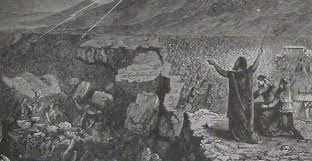
Instead, Moses places the matter before G‑d. The rebels are told to bring fire pans and incense, and G‑d will make clear who has been chosen for sacred service. The result is dramatic and terrifying. The earth opens and swallows Korach’s faction, while fire consumes the 250 men offering incense. Later, Aaron’s staff blossoms, confirming that his priestly role is not a political appointment, but a Divine calling.
On the surface, this is a story about rebellion. But beneath the surface, it is about something far more relevant: the difference between power and influence.
Korach wanted power. Moses carried influence.
That distinction may be one of the most important lessons Torah gives us for leadership, community, and life.
Power is positional. Influence is spiritual.
Power says, “I am in charge.” Influence says, “Let me help you see.”
Power can command behavior. Influence can change hearts.
Power often shrinks when it is shared. Influence grows when it is given away.
In the teaching of Rabbi Jonathan Sacks, this distinction is presented with remarkable clarity. Power is like pouring water from one vessel into another; the more one vessel receives, the less remains in the first. Influence is like lighting one candle from another; the first flame is not diminished. The room simply becomes brighter.
That is Moses.
When Eldad and Medad prophesied in the camp, Joshua worried they were threatening Moses’ leadership. Moses answered with one of the most generous lines in Torah: “Would that all the Lord’s people were prophets.”
Moses was not afraid of shared influence. He welcomed it.
But Korach was different. Korach did not seek to lift others. He sought to unseat Moses. He did not want the community to become more holy. He wanted holiness to become his argument for power.
This is the danger in every generation: when people invoke sacred language not to serve, but to control.
What This Means for Israel
For Israel, Korach is not theoretical.
Israel lives every day in the tension between power and influence. It must have power because without power there is no survival. A Jewish people without power knows too well what happens when others hold our fate in their hands. We have lived that history. We have buried its victims. We have carried its memory.
Israel needs soldiers, intelligence, borders, deterrence, and the willingness to defend itself when the world lectures from comfortable distance. Power is not immoral when it protects life. In a world where enemies still call for Israel’s destruction, power is a moral necessity.
But Israel has never survived by power alone.
Israel’s greatest strength is not only the Iron Dome, the IDF, or the courage of its soldiers. It is the influence of Jewish purpose. It is the idea that a small people, in a small land, carrying an ancient covenant, can still remind the world that life is sacred, memory matters, and justice must never be separated from holiness.
That is why the war of narratives is so painful. Israel is often judged not by what it does, but by what others need it to represent. To some, Israel becomes Korach’s convenient target: the one accused before being heard, condemned before being understood, and held to standards no other nation is asked to meet.
Yet Torah also demands that Israel never confuse necessary power with sufficient power. Military strength may defeat enemies, but only moral clarity sustains a nation. The question is not whether Israel has the right to defend itself. It does. The question is whether Israel can continue to wield power while preserving the deeper influence of Jewish values.
That is the burden of being Israel. Not simply to survive, but to remain worthy of survival.
Korach reminds us that leadership in crisis must be firm, but never arrogant. It must be strong, but never intoxicated by strength. It must know the difference between defending the covenant and defending personal pride.
Moses teaches Israel that true leadership is not measured by applause, popularity, or the loudness of one’s opposition. It is measured by faithfulness to the mission, especially when the ground beneath us feels ready to open.
What This Means for the United States
For the United States, Korach speaks directly into our national moment.
We are living in a time when grievance has become a political language of its own. Every side claims injury. Every faction claims purity. Every leader is accused of betrayal by someone. Every institution is doubted. Every compromise is treated as surrender.
Korach would do well on cable news.
He understood the power of a slogan. He knew how to take a partial truth and weaponize it. “All the congregation is holy” is not false. The people are holy. The problem is not the statement. The problem is the motive.
That is where America must pay attention.
A democracy needs challenge. It needs debate. It needs protest. It needs the courage to question authority. But democracy also needs trust, humility, and a shared commitment to something higher than victory.
When every disagreement becomes rebellion, when every opponent becomes an enemy, and when every institution is treated as corrupt unless it gives us exactly what we want, we are no longer practicing democracy. We are reenacting Korach in modern dress.
America’s greatness has never rested only in its power. Yes, we have armies, markets, technology, universities, and unmatched capacity. But America at its best has influenced the world through ideals: liberty, human dignity, constitutional order, religious freedom, and the belief that people of different backgrounds can still form one nation.
That influence is now under strain.
The lesson of Korach is not that leaders should never be challenged. Moses himself was challenged many times. The lesson is that challenge must be rooted in truth, not vanity; in responsibility, not resentment; in service, not self-promotion.
America needs leaders who understand that authority is not theater. We need citizens who understand that holiness cannot exist without humility. We need to recover the ability to disagree without trying to swallow one another into the earth.
And perhaps we need a little less certainty and a little more Moses: the leader who falls on his face before he opens his mouth.
That alone would improve most public meetings, family discussions, and possibly a few synagogue boards.
What This Means for Ocean Reef
For our Ocean Reef community, Korach offers a lesson close to home.
We are blessed to live in a remarkable place. Ocean Reef is beautiful, capable, generous, accomplished, and filled with people who have led companies, institutions, families, communities, and causes. It is also a place where many people are used to being in charge.
That is both a strength and, occasionally, a cardio workout for anyone chairing a committee.
In a community like ours, leadership cannot be built only on power. Titles matter, boards matter, governance matters, and decisions must be made. But the spirit of the community is shaped by influence: by the quiet example of service, by the willingness to listen, by the generosity to assume good intent, and by the humility to remember that we are stewards, not owners, of the sacred spaces entrusted to us.
The Chapel and Fellowship Center exists as a place of influence. It does not command. It invites. It does not coerce. It gathers. It does not belong to one denomination, one group, one generation, or one personality. It belongs to the sacred idea that faith can still unify people in a divided world.
That is why Korach matters to us.
Every community eventually faces moments of disagreement. The question is not whether disagreement will come. It always does. The question is whether we will argue for the sake of Heaven or for the sake of ego.
An argument for the sake of Heaven seeks truth. An argument not for the sake of Heaven seeks victory.
An argument for the sake of Heaven leaves the community stronger. An argument not for the sake of Heaven leaves people wounded, suspicious, and tired.
We have all seen both.
The work before us is to build influence that outlasts power. Buildings matter, programs matter, finances matter, and planning matters. But the influence we leave will be measured by something deeper: Did we make people feel welcome? Did we deepen faith? Did we bring Jews and Christians closer together? Did we model respect in an age of contempt? Did we leave more light than we found?
That is the leadership Moses teaches. Not leadership that demands honor, but leadership that creates holiness.
Lessons from the Wilderness
In prior weeks, we have walked through the wilderness together. We have seen the people complain about food, fear the future, misread freedom, and struggle to trust G‑d. We have watched them stand at the edge of promise and retreat into anxiety. We have seen how quickly fear becomes rebellion and how easily memory becomes distorted.
The wilderness is not only a place on the map. It is a condition of the human soul.
In the wilderness, people become tired. Tired people become afraid. Afraid people look for someone to blame. And when blame becomes organized, Korach appears.
This is why Torah places these stories together. The spies looked at the land and saw giants. Korach looked at Moses and saw an obstacle. In both cases, the problem was not reality alone. The problem was distorted vision.
Faith is the discipline of seeing clearly.
Moses saw leadership as service. Korach saw leadership as status.
Moses saw holiness as responsibility. Korach saw holiness as entitlement.
Moses saw influence as something to share. Korach saw power as something to seize.
That difference is the whole story.
And it is still our story.
Closing Reflection
The image that stays with me from Korach is not only the earth opening. It is Aaron’s staff blossoming.
After all the shouting, all the accusation, all the rebellion, G‑d does not merely confirm Aaron’s role through destruction. G‑d confirms it through life. A dry staff brings forth blossoms.
That is the sign of true spiritual leadership.
Not noise. Not ego. Not grievance. Blossoms.
Leadership worthy of trust makes something living grow where others saw only dead wood. It brings forth possibility from exhaustion, beauty from barrenness, and hope from a community that has been worn down by conflict.
That is what we need now in the world. That is what Israel needs. That is what America needs. That is what Ocean Reef needs. And, if we are honest, it is what each of us needs within ourselves.
We may not all hold power. Most of us will not command armies, lead nations, or decide the course of history. But every one of us has influence. Every one of us can light another candle. Every one of us can make the room brighter.
That may be the most Jewish truth of all.
Power may end when our term ends, when our title changes, when the meeting adjourns, or when history moves on.
Influence lives after us.
So this Shabbat, may we choose influence over ego, service over status, humility over grievance, and light over noise.
May G‑d protect Israel and her people.
May G‑d guide the United States toward wisdom, restraint, and moral courage.
May G‑d bless our Ocean Reef community with unity, generosity, and peace.
And may the One who makes peace in the heavens help us make peace here on earth.
עושה שלום במרומיו, הוא יעשה שלום עלינו,
ועל כל ישראל, ועל כל יושבי תבל.
Oseh shalom bimromav, Hu ya’aseh shalom aleinu,
v’al kol Yisrael, v’al kol yoshvei tevel.
May the One who makes peace in the heavens bring peace upon us,
upon all Israel, and upon all who dwell on earth.
Amen.
Support Our Congregation
Please consider supporting our congregation so we may continue offering meaningful programs and community events. Your generous gift helps make this work possible.
Donate Now