
Parshat Noach
Finding Comfort in a Flooded World
October 24, 2025 | 2 Cheshvan 5786
Shabbat Shalom, dear friends.
As I write this week’s reflection aboard the Royal Scotsman train, the wheels hum softly against the rails, winding through a land that feels somehow ancient and eternal — much like our Torah itself. Outside my window, lochs shimmer beneath veils of fog, the hills glow a hundred shades of green, and a rainbow has just appeared over the moors as if on cue. One might say G-d has a sense of timing — or, at least, a fine sense of symbolism.
There’s something poetic about studying Parshat Noach while traveling through Scotland. Between the drizzle, the bagpipes, and the ever-present mist, one begins to understand that even in the wettest places, light still finds a way to break through. And perhaps that is exactly what this week’s Torah portion is all about — not the flood that destroys, but the light that redeems.
A Brief Synopsis of the Parsha
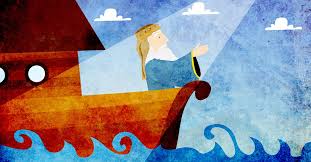
Parshat Noach (Genesis 6:9–11:32) tells one of the most recognizable and yet most misunderstood stories in all of Torah. Humanity, corrupted by arrogance and violence — chamas, as the Torah calls it — has lost its moral compass. G-d, grieved by creation’s cruelty, chooses to begin anew, instructing Noah a man righteous in his generation, to build an ark.
The rains come — forty days and nights of cleansing tears. When the waters finally recede, Noah sends out a dove that returns with an olive leaf — the first sign of renewal. G-d establishes a covenant, symbolized by the rainbow, promising never again to destroy the world by flood.
But human frailty remains. Noah falters in his vineyard, and later generations, in their pride, build the Tower of Babel — humanity once again reaching for heaven but forgetting the holiness of humility.
It’s a familiar pattern: hubris, downfall, renewal. Yet hidden within it lies something profoundly hopeful — that even in our lowest moments, G-d gives us the chance to begin again.
Building on the Journey So Far
In our readings of Bereshit and Ha’azinu, we spoke of cycles — of creation, endings, and new beginnings. We learned that Torah does not flow in a straight line; it spirals, inviting us to revisit, reimagine, and rebuild.
Parshat Noach continues that rhythm. Where Bereshit gave us the beginning of light, Noach teaches us how to rebuild when that light flickers. It asks us, quite simply: When the floodwaters rise — personally, nationally, or spiritually — how do we hold on to faith? And this is where we pick up this week lesson.
What’s in a Name?
When Noah was born, his father Lemech declared:
“This one will comfort us from our work and from the toil of our hands, from the ground that Adonai has cursed.” (Genesis 5:29)
The word yenachameinu — “will comfort us” — is a very interesting choice, it carries a double meaning: comfort and regret. It’s the same root used when G-d later “regrets” (vayinahem) creating humankind before the flood.
Human comfort and divine regret — two sides of the same coin. We seek to ease our burdens, while G-d longs for us to ease our conscience. According to the Midrash, Lemech foresaw that his son would invent the plow, finally making peace with the cursed soil. Yet the plow was not salvation — it was distraction. Humanity mistook technology for redemption, comfort for covenant.
And perhaps that’s our challenge today: to distinguish between what soothes us and what saves us.
Between Flood and Renewal, Israel Today
The current cease-fire between Israel and Hamas has brought a pause to violence, but not to pain. Hostages return home to trembling arms; others remain. Cities will rebuild; hearts remain broken. Like the ark settling upon Mt. Ararat, Israel finds itself in uneasy stillness — dry land beneath, storm clouds still above. The Torah gives us guidance for such moments.
The Flood as a Mirror
The Torah says, “The earth was filled with chamas.” Violence had become the world’s natural language. But notice — G-d doesn’t act in rage; G-d acts in grief. The flood is not divine punishment; it’s divine sorrow.
And so it is today. The world’s floodwaters are not G-d’s doing — they are our own. When hatred becomes normalized, when cruelty becomes strategy, when peace feels naive, the deluge begins anew.
Noach teaches us that righteousness in one’s generation matters. In every era, we are called to be the one who builds, who shelters, who preserves life when others destroy it.
Building the Ark — Together
Rashi teaches that G-d made Noah build slowly — over a hundred years — so that others might notice, ask, and repent. The ark was a sermon in progress, a visible invitation to moral awakening.
So too must Israel’s response to its trials be deliberate and moral — built plank by plank, guided not only by necessity but by conscience. True comfort will come not through strength alone, but through restraint, mercy, and a recommitment to the holiness of life.
The Rainbow of Restraint
After the storm, G-d sets a rainbow in the clouds — not as decoration, but as discipline. The Creator limits His own power, promising not to let anger drown the world again.
What a powerful lesson for our time: that true strength is not in might, but in moderation; not in vengeance, but in vision.
May Israel find that balance — to be strong yet compassionate, resolute yet righteous — and may the rainbow of covenant once again span Jerusalem’s sky, reminding us that even after the flood, holiness remains.
Lessons for America — The Flood of Division
Meanwhile, across the Atlantic, our own nation faces a different kind of storm. The flood here is made not of rain but of rhetoric — a deluge of outrage, noise, and tribalism.
It is, in many ways, our Tower of Babel moment. Everyone is building their own tower of truth, shouting from the top, and no one can understand the other’s language.
Parshat Noach gives us an antidote — humility, listening, and shared purpose.
The Ark of Diversity
Inside Noahh’s ark, the lion lay near the lamb, and somehow, both survived. That, in itself, was a miracle. The ark was not a space of sameness but of coexistence — a prototype for community.
In Sukkot, I wrote that the sukkah teaches us the holiness of fragile spaces. The ark teaches us the holiness of crowded ones — where difference itself becomes divine design.
If America could remember that — that democracy, like the ark, requires patience, feeding, and forgiveness — perhaps our floodwaters would finally begin to recede.
The Dove’s Olive Leaf
When Noah released the dove, it returned with a single olive leaf — not a branch, just a beginning. That small act of hope, that flicker of green in a drowned world, changed everything.
If we in America can rediscover even a single leaf of compassion — one moment of listening, one act of shared grace — we, too, might find dry ground again.
Maybe the dove is still flying. Maybe it’s just waiting for us to open the window.
Lessons for Our Community
We, too, have built our own ark — the Chapel and Fellowship Center — a sanctuary of faith, kindness, and reflection. Like Noach’s ark, it was built plank by plank, prayer by prayer, by those who believed that even in uncertain times, community could be a vessel of hope.
Here, we shelter one another from the tempests of the world outside. But the ark was never meant to drift forever; it was meant to land, to open its doors, and to begin again.
So let us step forward — into the world, into each other’s lives — as bearers of comfort and covenant. For as I’ve often written, faith is not a fortress but a bridge, and the true measure of belief is not how safe we feel inside the ark, but how boldly we rebuild once the storm subsides.
Closing Reflections
Lemech believed that comfort would come from the plow. Noah showed that it comes from purpose. The plow breaks the ground; purpose heals it.
In Israel, comfort will come not from cease-fires alone, but from the courage to rebuild trust. In America, comfort will come not from silencing one another, but from hearing one another again. And here at Ocean Reef, comfort will come from living as an ark for kindness, service, and renewal.
As my train curves around yet another loch, I’m reminded that G-d’s covenant was not with one nation, but with creation itself. Every rainbow — whether over the Highlands, Jerusalem, or the Keys — renews that same divine promise: that life, though fragile, is sacred; that humanity, though flawed, can always begin again.
And so, as the Scots would say, “Lang may yer lum reek” — may your chimney smoke long — may your homes be warm, your hearts open, and your faith ever steady through the rain.
תפילה לשלום — A Prayer for Peace
עוֹשֶׂה שָׁלוֹם בִּמְרוֹמָיו, הוּא יַעֲשֶׂה שָׁלוֹם עָלֵינוּ, וְעַל כָּל יִשְׂרָאֵל, וְעַל כָּל יוֹשְׁבֵי תֵבֵל. וְנֹאמַר אָמֵן.
May the One who brings peace to the heavens bring peace to us —
to Israel, to the United States, and to our community at Ocean Reef.
May He bless the work of our hands and the meditations of our hearts,
and may we, like Noach, have the courage to build and rebuild with faith, compassion, and hope.
Shabbat Shalom, and Slàinte!
Michael L. Weiss Ph.D., ABD, HCCP
President, Congregation Ocean Reef
Support Our Congregation
Please consider supporting our congregation so we may continue offering meaningful programs and community events. Your generous gift helps make this work possible.
Donate Now