
What We Carry Forward
Parshat Ki Tavo-Deuteronomy 26:1–29:8
Friday, August 28, 2026 — 15 Elul 5786
Shabbat, August 29, 2026 — 16 Elul 5786
Commentary by: Michael L. Weiss, Ph.D., HCCP
History sometimes moves so quickly that we can barely catch our breath, much less understand where it is taking us.
The war with Iran is approaching its sixth month. What began with the expectation that military force might produce a decisive outcome has settled into something more familiar and dangerous: a contest of endurance, economic pressure, missiles, drones, sanctions, and uncertainty. The Strait of Hormuz remains constricted, energy costs have risen, thousands have died, and neither side can honestly claim that peace is within reach.
This week, CIA Director John Ratcliffe made a rare and unannounced journey to Moscow, meeting with Russian intelligence officials while the world speculated about the purpose. Was the message about Ukraine, NATO, Iran, or all three? We do not know. Intelligence officials are not known for leaving detailed itineraries on the kitchen counter.
What we do know is that even adversaries eventually have to speak. When the world becomes dangerous enough, those who insist there is nothing to discuss often discover there is quite a bit to discuss after all.
Israel continues to face enemies determined to destroy it, yet it must also confront behavior within its own borders that threatens the moral foundation upon which the Jewish state was built. This week, a far-right member of the Knesset took a sledgehammer to a Palestinian memorial in the West Bank while Israeli soldiers stood nearby. The Israeli military condemned the act, but the image remains painful.
A Jewish hand should not be eager to destroy another people’s memory. We, of all people, should understand the sacred importance of monuments, graves, names, and stories. We have spent thousands of years asking the world not to erase ours.
Here in America, the national mood feels unsettled and increasingly unforgiving. Our institutions are being tested, our political coalitions are changing, and our public discourse has become less a conversation than a competition to see who can shout the longest without taking a breath.
America’s relationship with Israel—once grounded in broad bipartisan agreement—is also changing. Younger Americans, including younger American Jews, increasingly view Israel through a different and often more critical lens. Some criticism is legitimate and necessary. Some crosses the line into denying Israel’s right to exist. And some reaches for the oldest prejudice in the world, gives it a new vocabulary, and pretends it has discovered something modern.
Anti-Jewish hate crimes in America remain at historically high levels. Antisemitism is becoming so common that conduct which once would have shocked us now struggles to hold the public’s attention for more than a news cycle. That may be the greatest danger—not only that hatred exists, but that we are becoming accustomed to it.
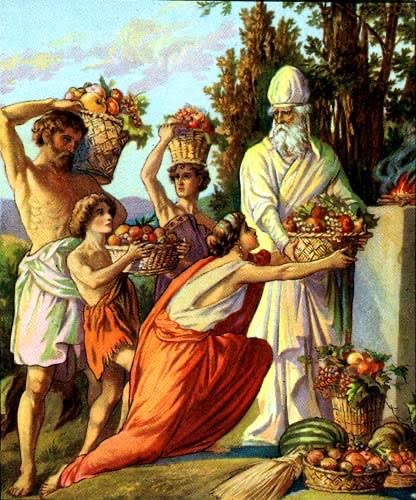
Into this restless world comes Ki Tavo, carrying a basket of first fruits.
Few Torah portions could be more appropriate for us to read this week. War is testing our courage, political division our patience, antisemitism our resolve, and the exercise of power the moral character of Israel and America alike. Ki Tavo reminds us that the survival of a people depends upon more than military strength or political victory. It depends upon remembering where we came from, expressing gratitude for what we have been given, protecting the vulnerable, and remaining faithful to our values when fear and anger tempt us to abandon them.
Ki Tavo does not offer an escape from this moment. It offers a moral compass for finding our way through it.
The opening image seems almost too gentle for our times: a farmer walking toward Jerusalem with figs, grapes, dates, or olives—the first produce of the season—balanced upon his shoulder.
Yet the Torah understands something our modern world repeatedly forgets. Civilizations are not preserved by armies, intelligence services, elections, or governments alone. Those institutions may protect a nation from dangers beyond its borders, but they cannot protect it from the moral decay that begins within. A people is sustained by memory, gratitude, humility, justice, and the daily choices of citizens who remain faithful to their values, especially when doing so is difficult or unseen.
That is why Ki Tavo is so relevant today. We are surrounded by war, political division, rising antisemitism, distrust of institutions, and a willingness to excuse conduct we once condemned. Israel is struggling with the responsibilities that accompany military strength and national sovereignty. America is struggling to preserve a common civic life while its citizens retreat into hostile political camps.
Ki Tavo speaks directly to these dangers. It teaches that memory must become responsibility, gratitude must lead to generosity, and power must remain accountable to justice. It warns that blessings cannot be sustained when gratitude gives way to entitlement, truth becomes negotiable, and strength is separated from moral restraint.
Weapons may defend a border, but only values can preserve a nation. Military power may help us survive our enemies, but memory, justice, gratitude, and compassion determine whether we remain worthy of the blessings we have survived to inherit.
A Synopsis of Ki Tavo
――――― ◆ ❧ ◆ ―――――
Ki Tavo begins as the Israelites prepare to enter the Promised Land. Moses instructs them that after settling the land and gathering its first harvest, they are to bring the first fruits—the Bikkurim—to the Temple.
The farmer does more than present a basket. He recites the story of his people:
“My father was a wandering Aramean.”
He remembers the descent into Egypt, the suffering of slavery, the Exodus, and G-d’s deliverance. Only after recounting that history does he declare that he has arrived in the land and now brings its first fruits in gratitude.
The Torah then commands the giving of tithes to the Levite, the stranger, the orphan, and the widow. Prosperity is not complete until those without land, family, power, or protection share in its blessings.
The people are instructed to inscribe the words of the Torah upon stones after crossing the Jordan. They are then to gather between Mount Gerizim and Mount Ebal, where blessings and curses will be proclaimed and the nation will affirm its covenant with G-d.
The blessings describe abundance, dignity, security, and peace. The curses warn what happens when a society abandons justice, gratitude, responsibility, and faith. They are not comfortable verses, but the Torah was never intended to be merely a collection of pleasant sayings suitable for framing. It is a covenant, and covenants have consequences.
The parsha closes with Moses reminding the people of all they have witnessed during their forty years in the wilderness. Yet only now, he tells them, are they beginning to acquire “a heart to know, eyes to see, and ears to hear.”
Apparently, even miracles require time to be understood.
Why Ki Tavo Speaks to Us Now
――――― ◆ ❧ ◆ ―――――
Ki Tavo addresses what happens when a people finally possesses land, security, prosperity, and power—and then risks forgetting the values that made those blessings possible.
That is precisely our challenge.
During times of fear, we are tempted to believe that survival excuses everything. During political division, we convince ourselves that defeating the other side is more important than preserving truth. During prosperity, we imagine that our success is entirely our own. During war, we can lose sight of the humanity of those beyond our borders.
Ki Tavo corrects each of these impulses. It offers five enduring lessons.
First, remember where you came from. Memory gives us perspective and prevents hardship from becoming bitterness.
Second, practice gratitude. Gratitude does not deny pain; it keeps pain from becoming the only thing we can see.
Third, use power responsibly. Strength without restraint eventually becomes cruelty.
Fourth, care for the vulnerable. A society cannot call itself blessed while the stranger, widow, orphan, poor, or powerless are forgotten.
Finally, understand that private conduct creates public destiny. Nations rarely lose their moral character all at once. They lose it through small compromises, repeated excuses, quiet dishonesty, and the gradual acceptance of behavior they once knew was wrong.
These are not abstract theological concepts. They are instructions for living. When we remember that we did not arrive here alone, we become more humble. When we name our blessings, we become less resentful. When we listen before condemning, we become wiser. When we use our influence to help others stand rather than forcing them to kneel, we become more worthy of the power entrusted to us.
Ki Tavo does not promise to remove every difficulty. It promises something more realistic and important: it can keep difficulty from removing our humanity.
Memory Is a Moral Compass
――――― ◆ ❧ ◆ ―――――
The declaration accompanying the first fruits is one of the Torah’s most revolutionary passages. The farmer does not praise only the rain, soil, or harvest. He tells a story.
“My father was a wandering Aramean.”
He speaks in the first person. He does not say, “Their ancestors went down into Egypt.” He says, in effect, “This is my story. I stand here because they endured.”
Rabbi Jonathan Sacks taught that Judaism transformed history into memory. History is what happened to someone else. Memory is what continues to live within us.
The farmer did not personally cross the Red Sea, yet he understood that the Exodus had crossed into him. His freedom was born from the suffering of those who came before him. His basket was filled not only with fruit, but with memory.
This is why destroying another people’s monument is so disturbing. A monument may be made of stone, but what it holds is memory. We can oppose Palestinian leadership, condemn terrorism, and defend Israel without apology while recognizing that another people’s grief is not an object for a sledgehammer.
Strength does not require cruelty. Jewish sovereignty should never mean that we imitate those who tried to erase us.
The lesson for our lives is equally clear. What experiences shaped the people we love? What burdens are they carrying that we cannot see? What history lies behind the person with whom we disagree?
Remembering another person’s story does not require surrendering our beliefs. It may simply prevent disagreement from becoming dehumanization.
What This Means for Israel
――――― ◆ ❧ ◆ ―――――
Israel has every right—and the solemn obligation—to defend its people against Iran and every force seeking its destruction. No responsible government can ignore missiles, drones, nuclear ambitions, or declarations calling for its elimination. Israel did not survive nearly eight decades by confusing hope with helplessness.
But Israel’s strength has never rested solely in its military power. It rests in the covenantal idea that Jewish power must remain answerable to Jewish values.
Ki Tavo does not tell Israel to become weak. It tells Israel not to become hardened.
There is a difference.
A strong Israel can defend its borders while protecting innocent human dignity. It can confront terrorism while condemning lawlessness by Jewish extremists. It can preserve Jewish history without destroying Palestinian memory. It can acknowledge mistakes without surrendering its legitimacy.
Maimonides understood that moral responsibility increases with power. In his teachings on tzedakah, the highest form of giving is not merely placing something into the hand of a person in need, but helping that person regain independence and dignity.
His point reaches beyond charity. The purpose of power is not to make others smaller. It is to create conditions in which human dignity can stand upright.
Those who love Israel must defend it from its enemies. We must also defend its soul from those who believe Jewish nationalism grants permission to humiliate others.
That is not disloyalty. It is covenant.
Israel’s future will not be secured by winning every argument. It will be secured by remaining recognizably Jewish—not only in language and ritual, but in justice, restraint, compassion, and reverence for life.
What This Means for the United States
――――― ◆ ❧ ◆ ―――――
America is also a nation built upon memory.
Its founders looked to biblical teachings for an understanding of covenant, law, divided power, human imperfection, and the obligations of leadership. They knew freedom could not survive on declarations alone. It required citizens willing to govern themselves before attempting to govern others.
Today, we are in danger of forgetting that lesson.
We increasingly treat political opponents not as fellow citizens with different ideas, but as enemies whose defeat excuses almost any conduct. We move the boundary markers of truth when it benefits our side. We excuse behavior from our leaders that we would condemn without hesitation in their opponents.
Then we wonder why the national harvest tastes bitter.
The changing relationship between America and Israel must be addressed honestly. Israel should not expect friendship to mean immunity from criticism. America should not permit criticism of an Israeli government to become collective condemnation of Jews or denial of the Jewish right to national self-determination.
Antisemitism often begins by insisting that Jews alone must pass a test demanded of no one else. Israel is judged by standards not applied to Iran, Russia, China, Syria, Hamas, or Hezbollah. Jewish Americans are treated as representatives of a foreign government while being told they have no right to feel connected to that country.
We should be able to hold two truths at once: Israel can be wrong in a particular action, and Israel still has the right to exist. Palestinians possess human dignity, and terrorism remains evil. America can be a faithful ally, and faithful allies can speak candidly to one another.
This should not require extraordinary intellectual gymnastics, although lately holding two thoughts at the same time appears to qualify as an advanced political skill.
The CIA director’s journey to Moscow offers another lesson. Even during deep hostility, someone must keep a door open. Dialogue is not surrender. Listening is not weakness. Sometimes the first step away from catastrophe begins quietly between people who deeply distrust one another.
We should pray that wisdom entered that room with them.
What This Means for Ocean Reef
――――― ◆ ❧ ◆ ―――――
At Ocean Reef, we enjoy blessings that would have been unimaginable to the farmer carrying his basket toward Jerusalem. We live amid beauty, security, friendship, and abundance. Yet Ki Tavo asks us the same question it asked him:
What will you do with your first fruits?
Our answer cannot be limited to what we place upon an altar or contribute to an institution. The Torah asks what portion of our patience, influence, compassion, experience, and time we will bring into the lives of others.
The Chapel gives us a remarkable example. Four congregations worship under one roof—Jewish, Protestant, Catholic, and Episcopal—each remaining faithful to its tradition while respecting the sacred path of the others. We do not surrender our differences. We sanctify the space between them.
But holiness cannot remain safely inside the Chapel. It must travel with us into our homes, boardrooms, community meetings, friendships, and disagreements. It must shape how we treat those who can do nothing for us and guide us when compromise is frustrating and patience runs low.
It is easy to be gracious when everyone agrees. The true test comes when the meeting has entered its second hour, the coffee has gone cold, and someone has again explained the point we understood the first three times.
That is when holiness becomes practical.
Ocean Reef is protected by gates, but our responsibilities do not end at them. Our talent, resources, experience, and influence are our first fruits. We are called to carry them outward—to strengthen our community, confront hatred, support Israel wisely, protect the vulnerable, and leave the world more decent than we found it.
Final Reflection
――――― ◆ ❧ ◆ ―――――
Ki Tavo begins with a basket and ends with a covenant. It begins with gratitude and leads us toward responsibility. It begins with memory and asks what kind of future we intend to create.
The farmer brings his first fruits because he understands that arrival is never entirely his achievement. Others planted before him. Others suffered before him. Others carried the covenant when he was not yet born.
So it is with us.
We inherited a Jewish story that survived exile, persecution, war, and nearly every attempt to erase it. We inherited an America built upon an imperfect but extraordinary promise. We inherited the State of Israel, restored after two thousand years, powerful enough to defend itself and still young enough to struggle with the moral burdens of power.
Our task is not merely to preserve these inheritances. It is to become worthy of them.
Ki Tavo gives us a way forward: remember your story, but do not become imprisoned by its pain. Be grateful for your blessings, but do not imagine they belong to you alone. Defend what is precious, but do not lose your compassion. Use power, but restrain it with morality. Speak publicly of justice, but practice it privately. Carry holiness beyond the sanctuary and into the places where life is actually lived.
The news may leave us discouraged. War continues. Diplomacy remains uncertain. Hatred grows louder. Relationships we once considered permanent are changing.
But Ki Tavo does not permit despair.
The farmer arrives in Jerusalem carrying proof that after wandering, slavery, wilderness, fear, and uncertainty, something still grew.
That may be the message we most need: something can still grow.
Peace can grow from a conversation no one expected. Justice can grow when good people refuse to remain silent. Friendship can deepen through honest disagreement. Jewish life can become more vibrant in the face of antisemitism. Israel can grow not only in strength, but in wisdom. America can rediscover that shared values matter more than partisan victory. Holiness can enter our daily lives whenever we choose gratitude over resentment, responsibility over entitlement, and compassion over indifference.
The Torah does not give us yesterday’s answers to yesterday’s problems. It gives us enduring questions that help us confront the problems of every generation: Who are we becoming? How should we use our blessings? What does justice require of us? How can we remain strong without losing our humanity?
Ki Tavo offers only one part of that continuing conversation. Each week, another parsha adds a new voice, another challenge, and another piece of wisdom. The more closely we read, the more we discover that the Torah is not merely describing the journey of our ancestors. It is illuminating our own.
The scroll may be ancient, but its questions are waiting for us tomorrow morning.
May we continue reading, questioning, and learning—and may the fruit we carry be worthy of the roots from which we came.
A Prayer
――――― ◆ ❧ ◆ ―――――
Almighty G-d,
As we approach the sacred days of reflection and renewal, help us remember the journey that brought us to this moment.
Give strength to those defending innocent lives, wisdom to those entrusted with power, and courage to those seeking peace where peace appears impossible.
Protect the people of Israel, the men and women of the United States serving in harm’s way, and all innocent people caught in the violence of war.
Comfort those who mourn, heal those who have been wounded, and bring home those separated from their families.
Teach us to confront antisemitism and every form of hatred without becoming consumed by hatred ourselves.
Help Israel remain strong in defense and faithful in spirit. Help America rediscover the humility, decency, and shared purpose upon which its freedom depends. Help our Ocean Reef community carry holiness beyond the walls of our Chapel and into our daily lives.
Give us hearts that remember, eyes that see, and ears willing to hear.
May we use our blessings with gratitude, our influence with compassion, our strength with restraint, and our freedom with responsibility.
And may the year ahead bring healing where there is pain, understanding where there is division, and peace where there is war.
Amen.
Shabbat Shalom
Michael L. Weiss, Ph.D., HCCP
President, Congregation Ocean Reef
August 28, 2026 / 15 Elul 5786
Support Our Congregation
Please consider supporting our congregation so we may continue offering meaningful programs and community events. Your generous gift helps make this work possible.
Donate Now
Michael,
Most excellent. Carole and I are on the way back from Budapest and Prague after tracing my mother’s life there. We’re filled with thoughts of vibrant life and horrific death of the Jews of Hungary. It makes me angry and hardens me in my lifelong support of Israel. That will never change. I’m grateful for your writing today pointing inward to the empathic Jewish soul which will also never change.
See you soon,
Steve