
Parshat Miketz
Lighting Candles When the World Feels Dark
December 19, 2025 | 29 Kislev 5786
Genesis 41:1-44:17-32:3
Some weeks, writing a Parsha commentary feels like an intellectual exercise. This week, it feels personal.
We come to Parshat Miketz carrying more than words—we carry memory, emotion, and a weight that many in the Jewish community recognize instinctively. When acts of hatred occur—such as the horrific murders at Bondi Beach, Australia—they do not land as distant headlines. They land close to home, echoing across generations and interrupting ordinary life.
For Jewish families, prejudice is not only about safety; it is about daily choice. Where we live. Where we worship. Where we send our children to school. Whether Jewish identity is worn openly or cautiously. Antisemitism does not always arrive violently; more often it creeps in quietly, shaping confidence, opportunity, and belonging.
And yet—and this matters deeply—we are still here. We are still hopeful. We are still lighting candles.
Judaism has never waited for the world to feel kind before choosing life. We choose it anyway. That is why, even now, we open the Torah and celebrate Chanukkah. And that is exactly why Parshat Miketz speaks so powerfully in this moment.
From the Pit to the Palace
Parshat Miketz opens with quiet restraint:
“At the end of two years…”
Two years Joseph remains in prison—forgotten, silent, suspended in uncertainty. Then, in a single night, everything shifts.
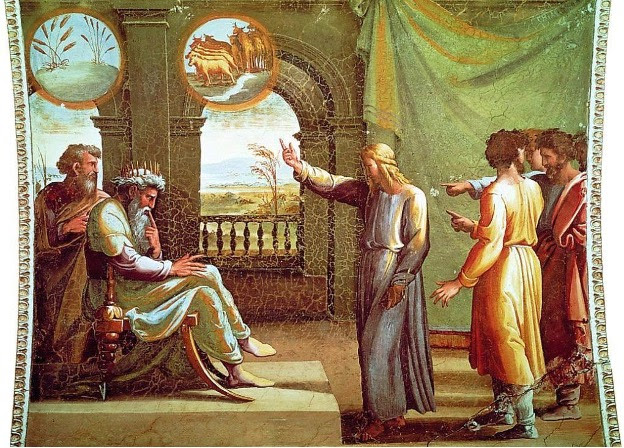
Pharaoh is disturbed by dreams he cannot understand, healthy cows consumed by starving ones; full stalks swallowed by thin and withered grain. None of his advisers can explain them. At last, Joseph is remembered.
Rushed from prison and brought before Pharaoh, Joseph is told, “I hear you can interpret dreams.”
He answers with humility:
“Biladai — not me. G-d will answer.”
Joseph explains that the dreams are one message: years of abundance followed by years of famine. More importantly, he urges action—prepare now, store wisely, and save lives.
Pharaoh recognizes Joseph’s wisdom and character. In a breathtaking reversal, Joseph rises from prisoner to viceroy of Egypt. During the years of plenty, he prepares. When famine strikes, Egypt endures—and people from surrounding lands come seeking food.
Among those who will soon arrive are Joseph’s own brothers, standing unknowingly before the brother they once sold. The story is now poised not for revenge, but for reckoning and repair.
What the Torah points out is not how quickly Joseph rises, but how he rises.
He does not grasp credit.
He speaks truth.
He earns trust.
That kind of character is not formed overnight. It is formed in the pit. And it is from here that the parsha turns from Joseph’s story to ours.
We Grow by Being Tested Again
The Torah rarely teaches in straight lines. It teaches in circles.
Joseph faces pits again.
Coats again.
False accusations again.
Judah, Joseph’s brother is forced to confront his past too—and this time he chooses honesty over denial. We pause on Judah because his story runs parallel to Joseph’s. Joseph grows through integrity in the face of injustice; Judah grows through accountability in the face of failure. Together, they teach a lasting truth: growth often comes when life brings us back to moments, we hoped were behind us and asks who we have become since then.
This week’s Parshat Miketz teaches us plainly:
Growth is not about avoiding the pit, it’s about who we are when we find ourselves back in it.
Some pits are public. Many are private. Faith is not proven by never falling, but by how we respond when we do. Joseph’s first pit was imposed on him. The second was entered because he refused to compromise who he was. One made him a victim, the other revealed his character.
From that place of tested strength, Miketz now asks us to look outward.
What This Parsha Asks of Us
For Israel, Miketz offers a model of leadership rooted in moral clarity. Strength must be guided by humility, power by responsibility. Survival alone is not enough—survival with purpose is what gives life meaning.
For the United States, the parsha reminds us that abundance carries obligation. Leadership requires truth-telling, preparation, and care for the vulnerable. Trust is earned through integrity, not image.
For us at Ocean Reef, Miketz feels close to home. We are blessed with resources, relationships, and opportunity. Torah reminds us that blessing is never an endpoint—it is a calling. Our biladai moments—when we say this is bigger than me—often happen quietly, through generosity, unity, and integrity when no one is watching.
Final Reflection: Lighting Chanukkah Candles When It Feels Hard
There are years when celebrating Chanukkah feels effortless—and years like this one, when light feels fragile.
After events like Bondi Beach, it can feel difficult to celebrate a festival rooted in joy. Yet the Torah does not ask us to deny darkness. It commands us to respond to it. Chanukkah was never about pretending night does not exist. It was about refusing to let the night have the final word.
That is the lesson of Parshat Miketz.
Joseph does not rise because suffering disappears. He rises because hardship refines him rather than hardens him. He chooses integrity over bitterness, humility over ego, faith over despair—one choice at a time.
And that is our task as well. This Chanukkah, we light candles not because everything is resolved, but because hope is an action. Because love must be practiced. Because community means we do not face darkness alone.
So we light anyway.
For those we have lost.
For the values we refuse to abandon.
For a future shaped by compassion rather than fear.
And as those flames grow night by night, may they remind us that even small lights—shared together—can still illuminate a world that needs them now more than ever.
A Prayer for Peace and Unity
May the One who makes peace in the heavens make peace for us, for all Israel, for America, for our Ocean Reef community, and for all who dwell on earth.
And may all God’s children—of every faith, nation, and background—find the courage to join hands, to stand as one family, and to heal this world with compassion, justice, and love.
Oseh shalom bimromav,
Hu ya’aseh shalom aleinu,
V’al kol Yisrael,
V’al kol yoshvei tevel,
V’al kol banav u’vnotav shel HaKadosh Baruch Hu,
V’imru: Amen.
עוֹשֶׂה שָׁלוֹם בִּמְרוֹמָיו,
הוּא יַעֲשֶׂה שָׁלוֹם עָלֵינוּ,
וְעַל כָּל יִשְׂרָאֵל,
וְעַל כָּל יוֹשְׁבֵי תֵבֵל,
וְעַל כָּל בָּנָיו וּבְנוֹתָיו שֶׁל הַקָּדוֹשׁ בָּרוּךְ הוּא,
וְאִמְרוּ: אָמֵן.
May unity be our calling, peace be our path, and healing be our legacy.
Shabbat Shalom
Dr Michael L Weiss, PhD., HCCP
President, Congregation Ocean Reef
Support Our Congregation
Please consider supporting our congregation so we may continue offering meaningful programs and community events. Your generous gift helps make this work possible.
Donate Now