
Parshat Toldot פרשת תולדות
November 21, 2025 | 22 Cheshvan 5786
Genesis 25:19 – 28:9
Wrestling With Blessings, Identity, and Ourselves
This week we enter Parshat Toldot, a narrative so layered and emotionally tangled that even Shakespeare would’ve thrown up his hands and said, “Too much drama — give me Macbeth instead.”
Just last week, we read that Rebecca was our gold standard of kindness, generosity, and moral clarity. She watered camels until the desert nearly ran out of sand. This week she’s coordinating disguises, cooking covert meals, and staging an operation Mossad would be proud of and Isaac would never see coming. Even Law & Order would need a special “Torah Crimes Division” to make sense of it.
Now a little secret, at home, Cheryl and I fall asleep with the TV on to very different tastes. Cheryl loves Alone — the survival show where rugged contestants are dropped into the wilderness with nothing but a knife and questionable optimism. I prefer gentle mysteries where the dog survives, the family reconciles, and I can sleep peacefully without dreaming about hypothermia. Toldot is both shows combined — wilderness survival and courtroom drama, intertwined with family dysfunction, destiny, and a confusing number of goats. Some might say, it’s the story of any large family. So without any further delay, lets dig into this weeks Parshat Toldot.
The Story Beneath the Story
The story doesn’t begin with Jacob wearing Esav’s clothes. It begins before birth. Rebecca feels the twins battling inside her — the first recorded sibling rivalry — and asks G-d what on earth is going on. G-d answers with a prophecy that sets the entire parsha in motion:
“Two nations are in your womb… the older shall serve the younger.”
Rebecca carries this prophecy like a hidden flame. She sees Esav as strong, bold, impulsive — the doer.
She sees Jacob as introspective, gentle, spiritually aware — the seeker.
Two children. Two destinies. Two truths.
And the Torah’s beauty lies precisely in this duality. It doesn’t flatten human beings into easy categories. It invites us to wrestle, as Jacob one day will.
Rebecca knows Jacob is the spiritual heir — not because she loves him more, but because G-d told her from the beginning. She sees Jacob value the birthright; she sees Esav sell it for soup. She sees danger in letting the covenant rest on someone uninterested in its responsibilities.
Duality, compassion, prophecy, fear — all swirling together.
Compassion in a Complicated Story
Rebecca is not a villain here. She is a mother trying to hold the family and the future together. She pushes Jacob not to deceive but to become — to grow into someone who can stand before his father with confidence. But like many parents, she helps perhaps a little too much. She cooks for him, protects him, dresses him, shields him from risk. She wants Jacob to stand tall, yet she holds him upright.
This is love’s paradox.
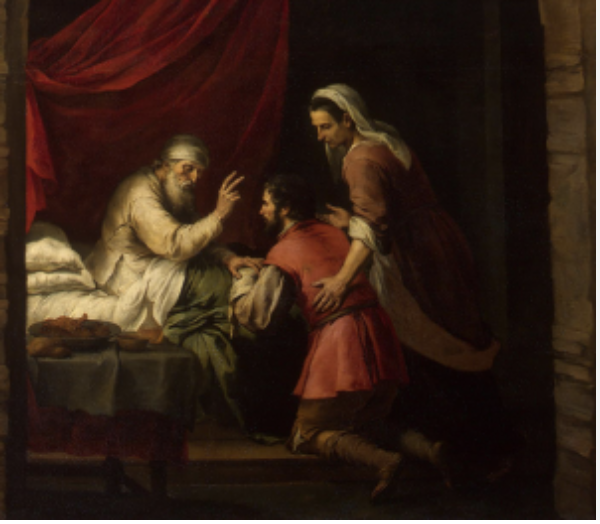
So when Isaac asks, “Who are you, my son?” Jacob freezes, overwhelmed by fear, hope, and too much goatskin.
“I am Esav.”
And the story turns tragic.
A well-intended act collapses into misunderstanding.
A family fractures.
A future becomes complicated.
But it is precisely here, in the brokenness, that the Torah invites us to learn compassion.
-No one is fully right.
-No one is fully wrong.
-Everyone is human.
The Human Condition “My Reflection”
When we step back from the drama — the fur, the soup, the trembling father, the fleeing brother Toldot becomes something far more than a story about a stolen blessing. It is a mirror held up to the human condition. Toldot teaches that human beings are rarely simple. We are, each of us, a walking contradiction.
We want to do right, yet we fear.
We want to be honest, yet we hide.
We want blessing, but we often seek it the wrong way.
We want peace, yet we cling to old rivalries.
We want connection, yet we avoid the conversations that would heal us.
Jacob wants the birthright because he values it — yet he reaches for it in ways that wound him.
Esav wants his father’s blessing — yet he sells the birthright with barely a thought.
Rebecca loves both sons — yet her silence deepens the divide.
This is us. This is all of us.
Toldot reveals several truths about being human
We are shaped by fear more than we admit.
Jacob fears he is not enough.
Rebecca fears the prophecy slipping away.
Isaac fears confronting the truth about his sons.
Esav fears losing love.
Fear pushes even good people into shadows and disguises — sometimes literally. And the fact is that we often inherit emotional patterns we do not understand. Abraham faced famine and fear.
Isaac repeats the same mistakes with the same King in the same land.
Jacob will continue the family pattern of favoritism among children.
We do not start fresh. We start in the middle of stories that came before us. Toldot teaches us that our strengths are entangled with our weaknesses:
Jacob’s sensitivity becomes his vulnerability.
Esav’s boldness becomes his impulsiveness.
Rebecca’s insight becomes her overreach.
Isaac’s love becomes his blindness, in more ways than one.
The Torah never divides people into heroes and villains, it divides them into humans.
Healing begins when we stop pretending.
The turning point of Jacob’s life — the night he becomes Israel — comes when he finally says his real name.
“I am Jacob.not Esav.
Not a costume.
Not an expectation.
And the Torah teaches:
Only the truth can bless you.
The meaning of Toldot for m
We will spend our lives wrestling — with identity, with fear, with family, with G-d. But the wrestling itself is holy. It is where faith is born, where courage grows, where blessing becomes real.
Toldot invites us to stop running from ourselves —
to speak truth,
to listen deeply,
to remove the disguises we’ve worn too long, and to understand that compassion is not weakness but wisdom.
The human condition is complicated. But the Torah’s promise is simple:
If we wrestle honestly — with ourselves, with each other, and with Heaven — blessing will follow.
Not perfection.
Not ease.
But blessing.
What This Means for Israel
Israel today lives in the same tension between destiny, survival, and moral courage that Toldot describes. Just this week, the United Nations approved a new Gaza Peace Plan, one that — for the first time in years — reflects an international willingness to acknowledge Israel’s security needs and the humanitarian hopes of Palestinians.
This is not merely politics. This is Toldot playing out in real time.
The plan acknowledges:
- Two peoples intertwined, like Jacob and Esav
- Two narratives, both wounded
- Two futures, both longing for dignity and safety
- Blessing that must not be zero-sum
The lesson from Toldot is not that one brother wins and the other loses. It’s that blessing distorted by fear becomes conflict, and blessing guided by compassion becomes peace.
Peace is not naïveté; it is Torah. And the plan — imperfect, fragile, hopeful — is an invitation to live out the hardest commandment of all:
Choose life. Choose compassion. Choose dialogue, even with your brother who once felt wronged.
In that sense, Israel is still Jacob — wrestling, enduring, refusing to surrender its identity, yet still searching for reconciliation without erasure.
May we see this plan become not just another resolution, but a step toward the day the prophets promised.
What This Means for the United States
If you ever doubted that Torah speaks today, look at America.
Rival political tribes.
Competing identities.
Each side convinced it deserves the blessing.
Sound familiar?
Toldot reminds America:
- Truth matters. When Jacob says “I am Esav,” chaos begins.
A society cannot thrive when truth becomes negotiable. - Listening matters. Jacob and Esav never talk until it is nearly too late.
America must rediscover conversation. - Shared blessing matters. A nation cannot bless only part of its family.
- Wrestling is holy. Integrity requires struggle — with history, with values, with ourselves.
If compassion guided Rebecca’s actions — even in error — then compassion can guide America back toward unity.
For Our Ocean Reef Community
Ocean Reef may not be Jacob and Esav’s tent, but we are a small family with big personalities.
Toldot encourages us to:
- Speak openly
- Assume good intentions
- Hold compassion as our guiding principle
- Build a community where blessing expands rather than contracts
We are at our best when we choose dialogue over assumptions, curiosity over judgment, and shared purpose over rivalry.
And let’s be honest: we may not wear goat skins, but sometimes we wear the baggage of old stories and old misunderstandings. This parsha invites us to set them down.
A Prayer for Us, for Israel, & America
Master of All,
Grant us hearts of compassion,
Eyes that seek understanding before judgment,
Courage to speak truth gently,
And wisdom to bless generously.
May Israel be sheltered in strength and unity,
And may the new hopes for peace — fragile though they are —
Become pathways of dignity, security, and life.
May America find healing in its divisions,
Clarity in its purpose,
And courage in its pursuit of justice and truth.
May our Ocean Reef community continue to grow
In friendship, respect, and shared purpose.
Guide us toward peace,
Toward wholeness,
Toward a future where blessing is abundant
For all Your children.
And let us say
Amen
רִבּוֹנוֹ שֶׁל עוֹלָם,
הַנְחֵנוּ בְּלֵב רַחוּם,
וּבְעֵינַיִם הָרוֹאוֹת אֶת הָאָדָם בְּטוֹבוֹ קֹדֶם לְדִין.
תֵּן לָנוּ אוֹמֶץ לְדַבֵּר אֶת הָאֱמֶת בְּנַחַת,
וְחָכְמָה לְהַשְׁפִּיעַ בְּרָכָה בְּיָד נְדִיבָה.
יְהִי רָצוֹן שֶׁתִּשְׁמֹר עַל יִשְׂרָאֵל בְּעֹז וּבְאַחְדוּת,
וְתִפְרֹשׂ עָלֶיהָ שָׁלוֹם בְּדֶרֶךְ יָשָׁר וְנָכוֹן.
וּתְבָרֵךְ אֶת מַאֲמַצֵּי הַשָּׁלוֹם הַחֲדָשִׁים
בְּבִטָּחוֹן, בִּדְגֻלָּה, וּבְכָבוֹד לְכָל הַחַיִּים.
וְעַל אַרְצוֹת הַבְּרִית,
הַשֵּׁב לָהּ רְפוּאָה, אַחְדוּת, וְאֹמֶץ מוּסָרִי.
וְעַל קְהִילָּתֵנוּ בְּאוֹשֵׁן רִיף,
תַּשְׁרֶה אַהֲבָה, חִבּוּר, וְרֵעוּת.
הוֹלִיכֵנוּ בְּדֶרֶךְ שָׁלוֹם,
דֶּרֶךְ שְׁלֵמוּת,
וְדֶרֶךְ שֶׁהַבְּרָכָה תִּהְיֶה מְסֻפֶּקֶת לְכָל בָּנֶיךָ.
וְנֹאמַר אָמֵן.
Shabbat Shalom,
Michael L Weiss Ph.D., HCCP
President, Congregation, Ocean Reef
Support Our Congregation
Please consider supporting our congregation so we may continue offering meaningful programs and community events. Your generous gift helps make this work possible.
Donate Now